Santorini Easter Ferry Deck Math Favors Wednesday Arrival Over Sunday Burnout
Easter week in Santorini is a study in contrasts. On Holy Saturday, the ferry deck from Piraeus is a wall of bodies, luggage, and last-minute anxiety. The caldera views you paid for are obscured by shoulders and selfie sticks. But there is a quieter way, one that regular islanders have known for years: book a Wednesday arrival instead. The math is simple, the savings real, and the experience transforms from endurance test to genuine travel.
The Wednesday Ferry Window Beats Holy Saturday Chaos
Holy Saturday ferries to Santorini carry roughly 1,200 to 1,500 passengers on the high-speed catamarans from Piraeus. That is near capacity. The deck becomes a crowded corridor; finding a seat requires boarding early or accepting a spot near the restrooms. Wednesday sailings, by contrast, often run at half that load — around 400 to 600 passengers — according to port staff in Piraeus who spoke on condition of anonymity because they are not authorized to release figures. The difference is stark.
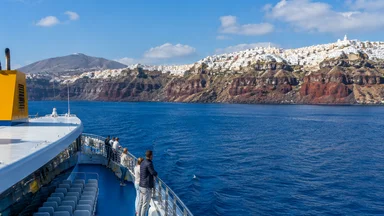
Weather in the Aegean Sea also cooperates midweek. Late April can still bring strong meltemi winds, but the period from Wednesday to Friday tends to be calmer than the weekend. The ferry ride, which takes roughly 4 to 5 hours from Piraeus, becomes a pleasure rather than a punishment. You can actually stand at the rail and watch the Cycladic islands slide by — Syros, Paros, Naxos — without jostling for space.
Port agents in Thira confirm that Wednesday is the calmest day of Holy Week for arrivals. The old port at Fira, where tenders shuttle passengers ashore, sees queues but not chaos. You can step off the boat, find a taxi or bus, and be at your hotel within an hour. Compare that to Saturday, when the tender line can stretch 45 minutes and taxis are scarce.
For travelers who value the journey itself, the Wednesday ferry delivers. The caldera approach from the sea is one of the great arrival scenes in Mediterranean travel, and it deserves to be seen without a crowd. Wednesday gives you that. You can watch the white cliffs of Thira rise from the water, the blue domes of Fira appearing gradually, and feel like you have arrived somewhere, not just survived a transfer.
How Orthodox Easter Dates Rewrite Ferry Demand
Orthodox Easter falls on a different Sunday each year, sometimes in April, sometimes in early May. That shifting date creates a predictable surge: the Wednesday before Easter Sunday marks the start of the peak travel window for islanders returning home. Ferry demand spikes roughly 40% on the Piraeus-to-Thira route during Holy Week, as estimated by Greek travel agencies that monitor booking data. The Sunday after Easter is the busiest return day, with ferries selling out by the preceding Tuesday.
Local islanders overwhelmingly travel on Wednesday or Thursday, not Saturday. They know that Holy Saturday is reserved for last-minute preparations and family gatherings. Tourists who book Saturday ferries are competing with locals who have no choice — and losing. The result is a Saturday deck packed with both groups, while Wednesday ferries carry a mix of early tourists and islanders visiting family, but at manageable numbers.
The ferry companies themselves adjust schedules. Blue Star Ferries and Seajets both add extra sailings for Holy Week, but the extra capacity is concentrated on Friday and Saturday. Wednesday usually operates on the regular timetable, which means fewer total seats available — but also fewer passengers chasing them. Booking early is still essential, but the Wednesday window offers a better chance of securing a seat without premium pricing.
Some travelers worry that arriving Wednesday means missing the Holy Saturday midnight service. In fact, you do not miss it — you arrive in time to attend it. Wednesday arrival gives you two full days to settle in, explore the island, and prepare for the solemn services of Good Friday and the Resurrection on Saturday night. The schedule works in your favor, not against it.
Lodging Math: Wednesday Arrival Cuts Cost by a Third
Hotel rates on Santorini during Easter week follow a predictable curve. Saturday check-in is the most expensive night, with prices in Fira ranging from 180 to 250 euros per night for a standard double room. Wednesday arrival, by contrast, opens the door to midweek rates that are 30% to 40% lower — roughly 80 to 120 euros per night in similar accommodations, based on listings from major booking platforms as of late 2024.
Airbnb data from the 2023 and 2024 Easter seasons shows a similar pattern. Entire apartments in Fira that rented for 150 euros per night on Saturday dropped to 90 euros for a Wednesday check-in. In Oia, the premium district, the gap is even wider: Saturday rates can hit 300 euros, while Wednesday rates hover around 150 to 180 euros. The savings are not trivial.
Hotels in Fira and Firostefani often offer discounts for stays of four nights or more, especially if the booking starts midweek. A Wednesday-to-Sunday stay of four nights can cost roughly the same as a Saturday-to-Wednesday stay of four nights, but you get an extra day on the island. The math favors the longer, midweek start.
Some travelers worry that arriving Wednesday means paying for two extra nights. But the per-night savings more than compensate. A Wednesday-to-Sunday stay at 100 euros per night costs 400 euros total. A Saturday-to-Wednesday stay at 200 euros per night costs 600 euros for the same number of nights. The Wednesday arrival saves 200 euros outright, and you get a quieter arrival day to boot.
Not all properties adjust pricing dynamically. Some small family-run pensions in Pyrgos or Megalochori keep flat rates year-round. But these are the exception, not the rule. On the whole, the midweek discount is real and substantial.
What Locals Actually Do During Holy Week
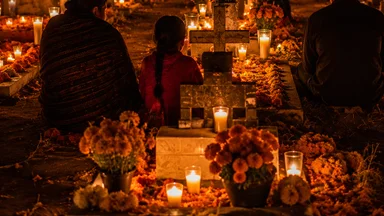
To understand why Wednesday arrival makes sense, it helps to know what Holy Week looks like for Santorini residents. The week is bookended by two major events: the Epitaphios procession on Good Friday evening, and the Midnight Resurrection service on Holy Saturday. These are not tourist performances; they are deeply religious observances that draw the entire community.
On Good Friday, the epitaphios — a wooden bier decorated with flowers — is carried through the streets of Fira and other villages. The procession is solemn, lit by candles, and followed by a slow hymn. Visitors are welcome, but the atmosphere is not festive. It is a night of reflection. Locals dress in dark clothing, speak in hushed tones, and participate with genuine devotion.
Holy Saturday night is the climax. Just before midnight, churches go dark, and at the stroke of midnight, the priest announces "Christos Anesti" — Christ is risen. Candles are lit, fireworks crackle, and the mood shifts to joy. Families return home to break the fast with magiritsa, a traditional soup of lamb offal and herbs. The next morning, Sunday, is for roasting lamb on spits, eating, and celebrating with extended family.
For locals, the ferries are a means to reunite with family, not a tourist activity. They travel Wednesday or Thursday to help with preparations, attend services, and share meals. By Saturday, they are settled. The tourist who arrives Saturday is an outsider arriving at the most intimate moment of the week. Arriving Wednesday gives you time to understand the rhythm and participate respectfully.
Tavernas during Holy Week are crowded with families, not influencers. The food is traditional, the prices are fixed, and the service is warm but unhurried. If you arrive Saturday, you will find waiting lists for dinner. If you arrive Wednesday, you can walk into a taverna in Pyrgos and eat alongside locals who have known each other for decades. That is a travel experience worth planning for.
The Tuesday Night Ferry Trick for Seating
If Wednesday arrival is good, Tuesday night is even better for the savvy traveler. Tuesday evening sailings from Piraeus to Thira are among the least crowded of Holy Week. The deck is open, the cabin class is often available for last-minute booking, and the mood is relaxed. Blue Star Ferries, which operates the conventional overnight ferry, frequently releases unsold seats on Tuesday afternoon, according to travel agents in Athens who monitor inventory.
Seajets high-speed catamarans on Tuesday also see lower demand. The difference is measurable: a Tuesday sailing might carry 400 passengers, while the same route on Saturday carries 1,200. That means more space to stretch out, a better chance at a window seat, and a calmer crossing overall. The trade-off is that Tuesday night means you arrive early Wednesday morning, which can be inconvenient for check-in if your hotel does not offer early arrival.
But many Santorini hotels are used to early arrivals from the overnight ferry. Most will hold your luggage or let you use the common areas until the room is ready. Some will even offer a discounted early check-in if you ask. The key is to communicate with the property in advance. A simple email explaining your ferry schedule often yields a helpful response.
The overnight ferry also saves a night of accommodation. If you board in Piraeus around 10 PM and arrive in Thira at 6 AM, you have effectively slept on the boat and gained a full day on the island. The cost of a cabin — roughly 30 to 50 euros for a shared berth — is far less than a hotel night. The math is compelling for budget-conscious travelers.
Not everyone loves the overnight ferry. The cabins are compact, the engines hum, and the wake-up call comes early. But for a single night, it is a practical and memorable way to travel. And it frees up your budget for a better hotel room or a longer stay.
Ground-Truth Costs: Prebooking Wins on Both Ends
Let us put real numbers on the table. A standard ferry ticket from Piraeus to Thira on the high-speed catamaran costs roughly 45 to 60 euros for economy class, depending on the operator and the time of booking. On Saturday of Holy Week, the same ticket can sell for 70 euros or more due to dynamic pricing, if it is available at all. Wednesday tickets tend to stay in the lower range. Hotel costs follow a similar curve: a midweek night in Fira at a three-star hotel costs roughly 80 to 120 euros, while on Saturday that same room jumps to 180 to 250 euros. The difference is consistent across booking platforms and property types. For a four-night stay, the Wednesday arrival saves between 200 and 300 euros total compared to a Saturday arrival.
Restaurant prices on Santorini are relatively fixed — a meal of grilled fish, salad, and wine costs roughly 25 to 35 euros per person regardless of the day. But wait times triple on Saturday night. You will spend your evening standing in line rather than enjoying dinner. Arriving Wednesday means you can dine at a normal hour, with normal service, and without the stress.
The total cost difference for a four-night trip — ferry plus hotel plus incidentals — is roughly 250 to 400 euros in favor of the Wednesday arrival. That is enough for a nice dinner, a bottle of Santorini Assyrtiko, and a boat tour to the hot springs. The choice is clear for anyone who values both experience and budget.
When Saturday Arrival Makes Sense: A Counter-Argument
Not everyone can rearrange their schedule to arrive on Wednesday. Work commitments, school holidays, or fixed flight itineraries often force travelers into the Saturday arrival. For those with rigid schedules, the Saturday ferry is the only option, and that is fine — the island is still spectacular, and the Resurrection service is unforgettable even if you arrive just hours before. The key is to go in with eyes open: expect crowds, book ferry tickets as early as possible (ideally two to three weeks ahead), and be prepared for higher prices.
If Saturday is your only option, consider a few mitigation strategies. Book the earliest morning ferry to arrive by midday, giving you time to check in and rest before the evening service. Reserve a hotel with a flexible check-in policy, and consider staying in a quieter village like Pyrgos or Megalochori rather than Fira or Oia, where the crowds are thickest. For meals, make dinner reservations well in advance or plan to eat late, after the first rush subsides. You can also pack a picnic from a bakery and enjoy a caldera view rather than waiting in line.
Another scenario where Saturday arrival might be preferable is if you are traveling with a large group or family with young children who cannot handle a long midweek trip. The Saturday ferry, while crowded, offers a direct route without the need for overnight travel. Some families find the chaos manageable if they board early and secure seats together. The trade-off is cost and comfort, but for some, the convenience outweighs the drawbacks.
Ultimately, the Wednesday arrival is a strategy for those with flexibility. If you can shift your travel by two or three days, the savings in money and stress are significant. But if you cannot, do not despair — Santorini at Easter is extraordinary regardless of when you arrive. The island's beauty and traditions transcend the ferry timetable.
Packing for Indecision: Layers for Church and Deck
Santorini in late April or early May is unpredictable. Daytime temperatures range from 15 to 22°C, but evenings can drop to 12°C, especially with wind. The ferry deck is exposed, and the church services are held in unheated buildings. Packing for both requires a strategy of layers.
A lightweight windbreaker or fleece is essential for the ferry crossing and for evening walks along the caldera. Church services, particularly the Epitaphios procession and the Resurrection, require covered shoulders and modest dress. A shawl or light jacket that can be slipped on and off works well. Comfortable walking shoes are non-negotiable — the cobblestone paths of Fira and Oia are beautiful but uneven.
Sunscreen is not just for summer. The midday sun in April can be strong, especially during a caldera hike from Fira to Oia. A hat and sunglasses complete the kit. The goal is to be prepared for sun, wind, and cool evenings without carrying a suitcase full of options.
For the ferry, a small backpack is better than a rolling suitcase. The gangways and decks are tight, and you will appreciate having hands free. A reusable water bottle, snacks, and a book or downloaded podcast make the crossing pleasant. The journey is part of the experience, not just a means to an end.
Packing for indecision means accepting that you will not have the perfect outfit for every moment. That is fine. The point of a Wednesday arrival is to slow down, adapt, and enjoy Santorini on its own terms. The island rewards flexibility. The traveler who arrives prepared for change will leave with memories, not regrets.
Practical Steps for Booking Your Wednesday Arrival
If you are convinced that Wednesday arrival is the right move, here is how to execute it. First, check the Orthodox Easter dates for your travel year — they vary, so confirm the exact Holy Week schedule. Then, book your ferry from Piraeus to Thira as early as possible, ideally four to six weeks in advance for the best prices. Use official ferry company websites or reputable aggregators like Ferryhopper or OpenFerries. For Wednesday, aim for a midday sailing to arrive in the afternoon, giving you time to settle in before evening.
Next, book your accommodation with a Wednesday check-in. Look for hotels in Fira, Firostefani, or Pyrgos that offer midweek discounts. Contact the property directly to ask about early check-in if you arrive on an overnight ferry. Many family-run hotels are happy to accommodate if you communicate ahead.
Plan your itinerary around Holy Week events. Wednesday and Thursday are for exploring the island — hike the caldera trail, visit Akrotiri ruins, or take a boat tour. Friday evening attend the Epitaphios procession in a smaller village like Pyrgos for a more intimate experience. Saturday night, join the Resurrection service at the Metropolitan Cathedral in Fira or a local church. Sunday is for feasting and relaxation.
Finally, pack smart and travel light. The Wednesday arrival is about efficiency and calm. By planning ahead, you can enjoy one of the most beautiful islands in the world at its most meaningful time, without the stress of the Saturday rush. The ferry deck will be half-empty, the hotel rate will be lower, and you will have time to experience Holy Week the way it was meant to be — with patience, respect, and a sense of wonder.