Georgia Kazbegi Guesthouse Prices Triple After October Military Road Closures
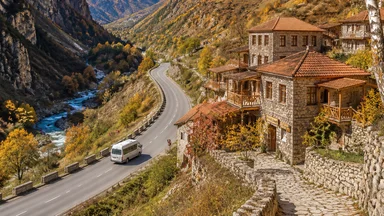
Kazbegi—officially Stepantsminda—sits at the foot of Mount Kazbek, a volcanic peak that draws hikers, photographers, and budget travelers seeking the iconic Gergeti Trinity Church against a snow-dusted backdrop. The journey from Tbilisi follows the Georgian Military Road, a dramatic ribbon of asphalt that climbs through the Dariali Gorge and over the Jvari Pass. The road itself is a highlight, but it is also the source of a predictable and expensive seasonal trap.
Every year, starting roughly mid-October, the Military Road closes for short periods—sometimes a few days, sometimes a week—for maintenance and avalanche prevention. The closures are announced locally but rarely reach international booking platforms. The effect on guesthouse prices in Kazbegi is immediate and drastic. Rooms that list for 50 GEL in September reappear at 150 GEL or more in the second half of October. Dorm beds jump from 30–40 GEL to 80–100 GEL. Private rooms that cost 80 GEL in early October become 200 GEL by the 20th. The price triples.
This article names the specific pitfalls a careful traveler should anticipate: the road closure that empties your wallet, the bus schedule that vanishes, the ATM that runs dry. It also offers three windows that actually work, and a packing list for the road-closure gamble. The goal is to help you avoid paying three times the normal rate for a room that would have cost 50 GEL a month earlier.
The October Trap: Why One Month Breaks the Budget
The Georgian Military Road connects Tbilisi to the Russian border at Verkhny Lars. It is the only paved route into Kazbegi. When it closes, the detour adds hours—if one exists at all. In practice, closure means that the limited supply of rooms in Stepantsminda is suddenly the only game in town for anyone who cannot or will not turn back. Local hosts know this. Prices adjust upward within hours.
Guesthouse owners in Kazbegi village do not operate on a fixed-rate system. Most set prices by the day, checking online demand and the road status. A room that was 50 GEL on a Tuesday in September can be 150 GEL the following Tuesday if the road closed over the weekend. The increase is not gradual; it is a step change. Some hosts require a two-night minimum during closure periods. Others offer half-board packages—dinner and breakfast included—to lock guests into a higher total. The half-board option often adds 30–50 GEL per person per night, but the base room rate is already elevated.
Cash becomes king during the closure weeks. ATMs in Stepantsminda are few and occasionally run out of notes. Hosts prefer payment in cash, and card acceptance is limited to a handful of newer guesthouses. If you arrive without enough Georgian lari, you may find yourself paying a premium to have a driver take you to the nearest working ATM in Gudauri or even back to Tbilisi. Some travelers report being quoted a flat 200 GEL for a shared taxi from Stepantsminda to Tbilisi during a closure—roughly four times the normal marshrutka fare of 15–20 GEL per person.
The price spike is not limited to accommodation. Meals at cafes in Kazbegi village increase by roughly 30% during the closure period, as local restaurants adjust to the captive market. A khinkali that costs 0.80 GEL in September might be 1.20 GEL in late October. A full dinner with drinks can jump from 15 GEL to 25 GEL. The increases are small in absolute terms, but they compound over a multi-day stay.
What the Brochures Don't Show About Shoulder Season
Travel brochures and online guides often describe September and October as ideal shoulder-season months for Georgia: fewer crowds, mild weather, lower prices. That is broadly true for Tbilisi, Batumi, and the wine region of Kakheti. It is not true for Kazbegi after the Military Road closures begin.
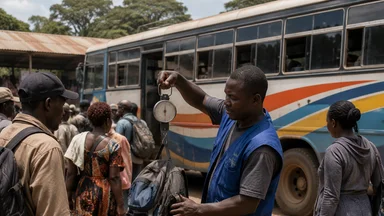
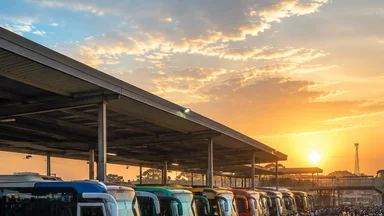
The drive from Tbilisi to Stepantsminda is advertised as two to three hours. In good conditions, with a private car, it can be done in under three hours. But marshrutka minibuses take longer—often three and a half to four hours—and they run on a schedule that thins out after mid-October. The daily marshrutka from Didube station in Tbilisi to Stepantsminda typically departs once in the morning and once in the early afternoon. After the road closures start, the second departure is frequently canceled. If you miss the morning bus, you may wait until the next day, or pay for a shared taxi at a premium.
Gudauri, the ski resort about 30 kilometers south of Kazbegi, is a popular stop for travelers heading north. Its ski lifts are closed from late April until early December. In October, Gudauri is a ghost town of empty hotels and closed restaurants. The lifts do not operate. The only reason to stop is if the road closure forces an overnight there. Guesthouses in Gudauri also raise prices during closure periods, though not as dramatically as in Kazbegi, because Gudauri has more rooms relative to demand.
The Gergeti Trinity Church hike, the main attraction in Kazbegi, becomes treacherous by late October. The trail starts at around 1,740 meters and climbs to 2,170 meters. Snow and ice can appear suddenly, making the path slippery. Hikers without proper boots and trekking poles risk injury. Local guides charge 80–100 GEL for a half-day hike, up from 50–60 GEL in summer. The church itself remains open, but the views are often obscured by low clouds. The classic postcard shot of the church against Mount Kazbek requires clear weather, which becomes less reliable in late autumn.
Named Scenario: The Solo Backpacker Who Got Stuck
Consider the case of Anna, a solo backpacker from Germany who arrived in Tbilisi on October 17. She had read that October was a good time to visit Georgia. She had not heard about the Military Road closures. She took the morning marshrutka to Stepantsminda on October 18, found a guesthouse for 60 GEL (the price had not yet spiked), and planned to stay two nights. On October 19, the road closed for maintenance. She woke to find her guesthouse rate had been raised to 120 GEL for the second night. She paid it.
On October 20, the road was still closed. The guesthouse owner told her she could stay at 150 GEL per night, or find another place. She checked two other guesthouses; both were full. She was stuck. The return marshrutka had been canceled. A shared taxi quoted 200 GEL per person. She waited four hours at the central square in Stepantsminda, hoping to find other travelers to split the cost. She found one other backpacker, a French man, but the driver would not negotiate below 150 GEL each. They paid 150 GEL each for the ride back to Tbilisi, arriving after dark. Her total cost for two nights in Kazbegi, including the return taxi, was roughly 380 GEL—almost three times what she had budgeted.
Anna's story is not unusual. Online forums and guesthouse review sites contain dozens of similar accounts from October and November. The common thread is that travelers arrive without knowing about the closure pattern, and they end up paying far more than expected. The lesson is to book shared transfers in advance during October. Several Tbilisi-based tour operators offer shared minibus transfers to Kazbegi for 30–50 GEL per person, but they require advance booking and often cancel if fewer than four people sign up. A private transfer booked a week ahead costs 120–150 GEL total, which is reasonable if split among three or four travelers.
Some travelers choose to hitchhike. The Military Road sees steady traffic, and Georgian drivers are generally willing to pick up hitchhikers. But during closures, the traffic thins, and drivers may be less inclined to stop. A solo female traveler might face additional safety concerns. Hitchhiking is a gamble, not a plan.
How Local Hosts React to the Closure Chaos
Guesthouse owners in Kazbegi are not acting out of malice. They are responding to supply and demand. When the road closes, the number of guests in the village does not drop—it often increases, because people who planned to pass through end up staying longer. Meanwhile, no new guests can arrive, so the total number of room-nights available is fixed. Prices rise.
Some hosts raise rates without notice. A traveler who booked a room at 50 GEL through Booking.com may arrive to find that the host claims the booking was a mistake and offers a room at 100 GEL. The host may insist on cash payment and refuse to honor the online rate. This is not universal, but it happens often enough that travelers should confirm the price in writing and carry a printout of the booking confirmation. Hosts who accept credit cards are more likely to honor the online price, because the booking platform can enforce it.
Other hosts require a two-night minimum stay during closure periods. This is a way to guarantee revenue. If you only wanted to stay one night, you are forced to either pay for two or find another guesthouse that does not have a minimum. In practice, most guesthouses in Stepantsminda enforce a two-night minimum from mid-October through November, regardless of the road status. The minimum is often not stated on booking sites; it is communicated upon arrival or via a message after booking.
Half-board packages are another common tactic. For an additional 30–50 GEL per person per night, the guesthouse provides dinner and breakfast. This can be a good deal if the local restaurants are also charging inflated prices, but it locks you into eating at the guesthouse. The quality of the food varies. Some guesthouses serve excellent home-cooked meals; others offer reheated khachapuri and instant soup. Ask to see the menu before agreeing to half-board.
Hosts in Kazbegi village prefer cash. Few guesthouses accept credit cards, and those that do often add a surcharge of 3–5%. ATMs in Stepantsminda are located at the main square and near the post office. They dispense Georgian lari in denominations of 20 and 50. During peak closure periods, the ATMs can run out of cash by midday. Travelers who arrive without sufficient cash may need to ask their host to drive them to Gudauri, where the ATM is more reliable, but that adds time and expense.
The Real Cost Difference: Pre- vs. Post-October
The price difference between early September and late October is stark. In September, a dorm bed in a guesthouse in Stepantsminda costs 30–40 GEL. A private room with a shared bathroom runs 60–80 GEL. A private room with an en-suite bathroom costs 80–120 GEL. These prices hold through the first week of October, assuming the road is open.
After October 15, the same dorm bed costs 80–100 GEL. Private rooms with shared bathrooms jump to 120–180 GEL. En-suite private rooms go for 150–250 GEL. The price triples for the cheapest options and roughly doubles for mid-range rooms. Luxury guesthouses with mountain views can charge 300–400 GEL for a room that was 150 GEL in September.
Meals at cafes follow a similar pattern. A lunch of khinkali and a drink costs 10–15 GEL in September. In late October, the same meal costs 15–20 GEL. A dinner with wine at a sit-down restaurant rises from 20–25 GEL to 30–40 GEL. The increases are not as dramatic as accommodation, but they add up over a three- or four-day stay.
Horse rides to the Gergeti Glacier, a popular excursion, cost around 150 GEL in September. In late October, the price is still 150 GEL, but it is less negotiable. The horses are in high demand, and guides know that travelers have few alternatives. Some guides charge 200 GEL for a half-day ride. The price can be negotiated down to 120–130 GEL if you are a skilled bargainer, but many travelers pay the asking price.
Transport is the biggest variable. A marshrutka from Tbilisi to Stepantsminda costs 15–20 GEL in September. In late October, if the road is open, the price may rise to 25 GEL. If the road is closed, the marshrutka does not run, and a shared taxi costs 100–200 GEL per person. A private taxi booked in advance costs 120–150 GEL total, regardless of season, which is the best option for groups of three or four.
When to Actually Go: Three Windows That Work
The first and best window is late May to early June. The snow has melted on the lower trails, the Gergeti Church hike is clear, and the Military Road is fully open. Guesthouse prices are low because the summer crowds have not yet arrived. A private room costs 60–80 GEL. The weather is mild, with daytime temperatures around 18–22°C at the village level and cooler at altitude. The only downside is that some mountain passes may still have patches of snow, and the river crossings can be high from snowmelt. But for budget travelers, this is the optimal time.
The second window is September. The weather is stable, the crowds have thinned after the August peak, and prices are still low. The road is open. The autumn colors begin to appear in the valleys. The hike to Gergeti Trinity Church is dry and safe. Daytime temperatures are 15–20°C. The only risk is an early cold snap, which can bring snow to the higher trails by late September. But September is reliably good for Kazbegi. Book accommodation in advance, because September is popular with European tour groups.
The third window is mid-July to August. This is the peak tourist season, so prices are higher than in May or September, but the road is open and all services are running. A private room costs 80–120 GEL. The weather is warm, with daytime temperatures up to 25°C. The main drawbacks are crowds and the need to book well in advance. Guesthouses in Stepantsminda fill up quickly in August. If you can tolerate the crowds and the higher prices, this is a reliable time to visit.
Avoid October 10 through November 1 entirely. The road closures are most frequent during this period, and prices are at their peak. If you must visit in October, aim for the first week, when the road is still open and prices have not yet spiked. After November 1, the closures become less frequent as winter sets in, but the weather is cold and many guesthouses close for the season. Winter travelers should only go if they plan to ski at Gudauri, which has its own accommodation and lift schedule.
Packing for the Road Closure Gamble
If you decide to visit Kazbegi in October, pack as if you might get stuck. The most important item is cash. Bring small denominations—5, 10, and 20 GEL notes—because hosts and drivers rarely have change for 100 GEL notes. The ATMs in Stepantsminda may not work, and the nearest reliable ATM is in Gudauri, 30 kilometers south. Carry enough cash to cover accommodation for at least three nights, plus meals and a potential taxi back to Tbilisi. A safe amount is 500 GEL per person for a three-night stay.
Offline maps are essential. Mobile data coverage in the Dariali Gorge and around Kazbegi is patchy. Download Maps.me or OsmAnd for the region before leaving Tbilisi. These apps work without an internet connection and include hiking trails, guesthouse locations, and points of interest. A paper map is a reliable backup.
Warm layers are necessary even in September at altitude. The temperature in Stepantsminda can drop to 5°C at night in September, and to below freezing in October. A fleece jacket, a windproof shell, a warm hat, and gloves are worth carrying. The hike to Gergeti Trinity Church is exposed to wind, and the temperature at the church is several degrees colder than in the village.
A flashlight or headlamp is useful because power cuts are common in Kazbegi guesthouses, especially during storms. The village receives electricity from a grid that is prone to outages. A headlamp allows you to navigate the guesthouse and the village streets after dark. Spare batteries or a power bank are also helpful.
Snacks are a practical hedge against unplanned delays. If the road closes and you are stuck in a guesthouse with limited meal options, having nuts, dried fruit, or energy bars can tide you over. The local shops in Stepantsminda stock basic provisions, but prices are elevated during closure periods, and the selection is limited. Packing your own snacks saves money and ensures you have something to eat if the guesthouse kitchen is closed.
Finally, consider travel insurance that covers trip interruption or delay. Some policies reimburse additional accommodation and transport costs if a road closure forces an extended stay. Read the fine print to confirm that the policy covers weather-related road closures in Georgia. Not all do.
However, packing for the worst case has trade-offs. Carrying 500 GEL in cash is risky if lost or stolen, and a heavy pack with layers, snacks, and a headlamp may be unnecessary if you visit in May, when the road is reliably open and temperatures are mild. For May travelers, a lighter pack with a fleece and rain jacket suffices; the cash requirement drops to 200 GEL for incidentals. The packing list above is tailored for October gamblers. If you choose a safer travel window, you can shed half the weight and worry.