Oktoberfest Beer Tent Math Favors Weekday Reservations Over Weekend Walk-Ins
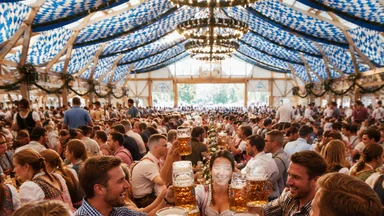
Every September, Munich transforms into a city of tents, beer, and crowds. For travelers who want to experience Oktoberfest without paying a premium for spontaneity, the math is clear: weekday reservations beat weekend walk-ins by a wide margin. The difference shows up in tent table costs, accommodation prices, train fares, and even queue times. This breakdown uses data from the 2023 Munich Tourism visitor survey and current 2024 pricing to show where the savings live — and where they disappear.
Weekend Walk-Ins Pay a 40–60 Percent Premium on Tent Tables
The most visible cost at Oktoberfest is the tent table. A midweek reservation — booked weeks or months ahead — typically runs roughly €25–35 per person. That covers a bench spot in one of the major tents like Augustiner or Hofbräu, usually with a minimum spend on food and drink. Weekend walk-ins, by contrast, face a different price structure. Without a reservation, the same bench can cost €40–55 per person, if a spot is available at all.
The 2023 Munich Tourism visitor survey, which gathered responses from roughly 1,500 attendees, found that about 70 percent of tent tables are booked by March for the September–October run. By June, weekend slots in the largest tents are essentially gone. The premium reflects simple scarcity: limited supply of unreserved tables on Friday and Saturday nights, when demand peaks. The survey data is from 2023, and while pre-pandemic patterns were similar, each year's booking cycle varies slightly.
Some tents reserve up to 80 percent of their tables for pre-booked groups, leaving only a fraction for spontaneous visitors. The walk-in price is not officially set by the tents; it emerges from the secondary market or from the few unreserved benches that are allocated on a first-come, first-served basis. Many travelers report paying €50 or more for a weekend spot that would have cost half that on a Tuesday. The premium is not universal — smaller, less central tents sometimes have cheaper walk-in options — but for the iconic halls, the weekend markup is consistent.
Travelers who arrive without a reservation on a Friday evening often end up queueing outside tents for 30 to 90 minutes, only to be turned away if the tent is full. The 2023 survey noted that weekend evening rejection rates in popular tents exceeded 40 percent. A weekday lunch visit, by contrast, typically involves no wait before 3 PM. The combination of higher price and higher rejection risk makes weekend walk-ins a costly gamble.
Munich Accommodation Triples During the 16-Day Run
Lodging costs during Oktoberfest follow a similar pattern. A hostel dorm bed that costs roughly €30 per night in mid-September jumps to €80–120 per night during the festival. Budget hotels near Theresienwiese, the festival grounds, list rooms at €150–250 in 2024, according to Booking.com data. The surge is roughly three times the off-peak rate for the same properties.
Airbnb listings in central Munich often require a 3–5 night minimum stay during Oktoberfest, which pushes the total cost higher for short trips. A two-night weekend stay in a private room can easily run €300–500. The price variability depends on booking platform, cancellation policy, and how far in advance the reservation is made. Some travelers report finding deals by booking 8–10 months ahead, but that requires committing to dates early.
For those willing to stay outside the city center, options in suburbs like Pasing or Freimann can be €30–50 cheaper per night, though the commute adds 20–30 minutes each way by S-Bahn. The trade-off is time versus money. A weekday trip, which can be done as a day trip from Frankfurt or Stuttgart, eliminates lodging cost entirely — a significant saving.
The accommodation math also favors midweek arrivals. Tuesday and Wednesday nights are slightly cheaper than Friday and Saturday, with some hotels offering a 10–15 percent discount. The difference is not as dramatic as the tent table premium, but for a three-night stay, it can add up to €50–100 saved.
Train Tickets from Frankfurt Cost Less if Booked 6 Weeks Out
Getting to Munich from other German cities is another area where advance planning pays. Deutsche Bahn saver fares, known as Sparpreis, start at €19.90 one way for a Frankfurt–Munich journey when booked roughly six weeks ahead. The same route on a flexible, last-minute ticket costs €60–100. The journey takes about 3.5–4 hours on an ICE train, making it a viable day trip from Frankfurt.
The savings are substantial: 50–70 percent compared to buying a ticket on the day of travel. However, saver fares sell out, especially on weekends and during Oktoberfest. The number of discounted tickets per train is limited, and once they are gone, the price jumps to the next tier. Booking as soon as the schedule is released — usually 6 months ahead — gives the best chance of landing the lowest fare.
For travelers coming from other European cities, the same principle applies. FlixTrain and other budget operators offer similar advance-purchase discounts, though their routes are more limited. A saver fare from Berlin to Munich can be as low as €29.90 if booked early, compared to €80–120 for a flexible ticket. The key is to book at least 4–6 weeks out and avoid weekend travel dates, which are more expensive.
One counterpoint: saver fares are non-refundable and often non-exchangeable. If plans change, the ticket money is lost. Some travelers prefer the flexibility of a more expensive ticket, especially if they are unsure about their return time. But for those with fixed plans, the savings are hard to ignore.
Food and Beer Prices Are Fixed, but Queue Time Varies
Inside the tents, prices are set annually by the Munich city council, so there is no discount for weekday visits. A Maß of beer — a one-liter mug — costs between €12.60 and €14.90 across the major tents in 2024. A half chicken runs about €12–16, depending on the tent. These prices are uniform regardless of the day or time, so the cost of food and drink is the same for weekday and weekend visitors.
What changes is the queue time. Weekend evenings at popular tents like Hofbräu or Paulaner can involve waits of 30–90 minutes to get in, even for those with reservations. Weekday lunch entry, especially before 3 PM, often has no wait at all. The trade-off is clear: a Tuesday lunch costs the same beer price as a Saturday night, but saves an hour of standing in line.
The official price list is published each August on the Munich tourism website. It varies by tent — smaller tents sometimes charge slightly less, but the difference is usually under €1. The fixed pricing means that the cost of food and drink is not a factor in the weekday-versus-weekend decision. The real variable is time: how long you are willing to queue and how much you value a relaxed experience versus a packed one.
Some visitors argue that the weekend atmosphere is worth the wait — the tents are fuller, the music louder, the energy higher. That is a subjective preference. But from a purely logistical standpoint, a weekday visit delivers the same beer and chicken with less hassle.
Reservation Systems Favor Groups of 8–10 on Weekdays
Making a reservation at Oktoberfest is not straightforward for solo travelers or small groups. Most tents reserve 80 percent of their tables for pre-booked groups, and the minimum group size is typically 8–10 persons. A group of two or four cannot book a table in most major tents; they must join a larger party or rely on walk-in benches.
Weekday reservations are easier to secure. Tents like Augustiner and Hofbräu often have open slots on Tuesday, Wednesday, and Thursday well into August. Weekend reservations, by contrast, are usually gone by June for the most popular tents. The official reservation portal, run by each tent individually, opens at different times, but the pattern is consistent: early birds get the cheap seats.
For solo travelers or couples, the best strategy is to join a group booking through online forums or social media. Several Facebook groups and Reddit threads exist specifically for Oktoberfest table sharing. The arrangement is informal — you pay your share of the reservation cost and show up at the assigned time. It works, but it requires a leap of faith in strangers.
Each tent has its own booking policy, which adds complexity. Some tents require a minimum food and drink spend per person; others just charge a flat reservation fee. The details are published on the tent websites, usually in German. Translation tools help, but it is worth reading the fine print. A few tents, like the Käfer tent, are known for being more accommodating to small groups, but they also charge higher reservation fees.
Budget Breakdown: A Weekday vs. Weekend Day Trip
Pulling the numbers together, the difference between a weekday and a weekend day trip from Frankfurt is significant. On a weekday, a traveler might spend roughly €25 for a tent reservation (or share cost in a group), €35 on food and drink (one Maß and a meal), and €20 for a saver train ticket each way. Total: about €80 per person, excluding lodging if returning the same day.
On a weekend, the same trip without a reservation could cost €50 for a walk-in tent table, €35 for food and drink, and €60 for a last-minute train ticket. That adds up to roughly €145 per person. If lodging is needed — a likely scenario for a weekend trip — a hostel bed adds another €80–120. The weekend total then reaches €225–265 per person, compared to €80 for a weekday day trip.
The difference of €65–105 per person (without lodging) or €145–185 (with lodging) is substantial for a single day of drinking. For a group of four, the savings can cover a nice dinner in Munich. The numbers are based on 2023–2024 averages, and individual results vary. Train ticket prices fluctuate with demand, and tent reservation costs depend on the specific tent and group size.
One caveat: a weekday day trip from Frankfurt means leaving early and returning late — roughly 6 AM to midnight. It is a long day. Some travelers prefer to stay overnight even on a weekday, which adds lodging cost but reduces rush. The trade-off is between money and comfort.
How to Lock in the Cheapest Weekday Slot
The strategy for minimizing cost is straightforward but requires discipline. First, book train tickets via Deutsche Bahn Sparpreis at least six weeks ahead. Set a calendar reminder for when the schedule opens — usually 6 months before travel — and purchase immediately for the best price. Choose a Tuesday, Wednesday, or Thursday departure; those days have the lowest demand and the cheapest fares.
Second, reserve a tent table through the official Oktoberfest reservation portal. For groups of 8–10, this is easy. For smaller groups, join a table-sharing group on forums or social media. Aim for a lunchtime slot, say 11 AM to 3 PM, which allows entry before the midday crowd and avoids the evening peak. Arrive at the tent by 11 AM to claim any unreserved benches before they fill up.
Third, book accommodation with free cancellation at least 48 hours prior. This allows flexibility if plans change. Hostels are the cheapest option, but budget hotels near Hauptbahnhof offer a middle ground. Avoid properties that require full prepayment or have strict cancellation policies.
Finally, bring cash. Many tents and food stalls do not accept cards, and ATMs near Theresienwiese often run out of cash on busy days. A weekday visit reduces the risk of ATM queues, but it is still wise to carry enough for the day. With these steps, a traveler can experience Oktoberfest for roughly €80 per person — a fraction of the weekend cost.
Alternative Approaches: Combining Weekday and Weekend Strategies
Not every traveler can commit to a full weekday trip. Some may have work or other obligations that force a weekend visit. In those cases, there are still ways to reduce costs. One approach is to arrive on a Thursday afternoon and leave on Saturday morning. That splits the difference: you get a Friday night in the tents (peak demand) but avoid the Saturday night premium. Accommodation on Thursday night is cheaper than Friday, and the train fare on Thursday is lower than on Friday.
Another hybrid strategy is to stay in a nearby city like Augsburg or Nuremberg, where hotel prices are roughly 30–50 percent lower during Oktoberfest than in Munich. Augsburg is about 40 minutes by regional train from Munich Hauptbahnhof, with tickets costing roughly €10–15 each way. A traveler could stay in Augsburg for €60–80 per night, commute to Munich each day, and still save compared to a Munich hotel. The trade-off is the extra travel time — roughly 40 minutes each way — which can feel significant after a long day at the festival.
Some travelers opt for a hostel in Munich's student district, such as Schwabing, where dorm beds are often €10–20 cheaper than those near the Hauptbahnhof. The walk to Theresienwiese is longer, about 25–30 minutes, but the savings add up over a multi-night stay. For groups, renting an apartment through platforms like Airbnb can be cheaper per person than individual hostel beds, especially if the group is four or more.
Seasonal and Weather Considerations
Oktoberfest runs from late September to the first weekend in October. The weather in Munich during this period is unpredictable: temperatures can range from roughly 10°C to 25°C, and rain is common. Weekday visits in the first week of the festival (late September) are often warmer and less crowded than the final weekend, which coincides with German Unity Day on October 3. The final weekend is known for being the busiest, with tent tables selling out months in advance and walk-in prices at their highest.
Rain is a factor that affects both comfort and cost. Tents are covered, but the walkways between them are exposed. On rainy days, the crowds thin out slightly, and some walk-in tables may become available even on weekends. A traveler willing to brave wet weather can sometimes find a weekend table at a lower price — though this is a gamble. The 2023 season saw above-average rainfall, and some visitors reported paying €40–45 for weekend walk-in spots that would have cost €50–55 in dry weather.
Temperature also influences the experience. A warm weekday in late September, with temperatures around 20°C, is ideal for sitting outdoors in the beer garden areas of tents like the Augustiner or the Hofbräu. These outdoor sections are often unreserved and free to enter, making them a budget-friendly option for weekday visitors. On cold or rainy days, the indoor sections fill up faster, and reservations become more valuable.
Group Dynamics and Social Considerations
The math changes for larger groups. A group of 8–10 people can book a table directly, avoiding the walk-in premium and the uncertainty of secondary market prices. For a group that size, the per-person cost of a weekday reservation might drop to €20–25, as some tents offer volume discounts. On weekends, the same group might pay €35–45 per person for a reserved table, but the reservation is harder to secure.
For solo travelers, the calculus is different. Joining a table-sharing group is the most cost-effective strategy, but it requires social flexibility. Some solo travelers prefer the spontaneity of walk-in benches, even if it costs more. The trade-off is between money and autonomy. A solo traveler on a weekday can often find an unreserved bench at a small tent like the Paulaner or the Spaten, paying only the cost of food and drink — no reservation fee. That can bring the total to roughly €30–40 for a meal and a beer, making it the cheapest option of all.
Another social factor is the dress code. Many visitors wear traditional Bavarian clothing — dirndls for women, lederhosen for men. These outfits can be expensive to buy or rent. A new dirndl costs roughly €50–150, and lederhosen €70–200. Rental options are available in Munich for €30–60 per set. Weekday visitors who want to dress up can often find last-minute rentals at lower prices, as demand is lower midweek. Some budget travelers skip the traditional attire altogether, which is perfectly acceptable but may feel out of place in the more traditional tents.
Longer Stays and Multi-Day Budgeting
For travelers planning a multi-day stay, the savings from a weekday arrival compound. Arriving on a Tuesday and leaving on a Thursday means three nights of cheaper accommodation, two days of cheaper train fares, and the ability to visit the tents on Wednesday and Thursday — the two least crowded days. A four-day trip (Tuesday to Friday) might cost roughly €300–400 per person, including lodging, tent visits, and meals. The same trip on a weekend (Friday to Monday) could easily top €600–700 per person.
The key is to build the itinerary around the cheapest days. Tuesday and Wednesday are the best for tent visits; Thursday is slightly busier but still manageable; Friday and Saturday are peak; Sunday is busy but less so than Saturday. Monday is quiet, as many locals return to work. A traveler who arrives on a Sunday and leaves on a Tuesday can enjoy two quiet days at lower cost, though Sunday accommodation is still priced at weekend rates.
For those combining Oktoberfest with other European travel, Munich is well-connected by budget airlines and trains. A traveler coming from Paris or Amsterdam can find saver fares on Thalys or TGV for roughly €30–50 if booked early, connecting through Frankfurt or Stuttgart. The key is to treat the entire trip as a logistics puzzle: book transport first, then accommodation, then tent reservations. Each step locks in savings that are lost if done in reverse order.
Final Considerations and Caveats
The numbers in this article are based on 2023–2024 data and are subject to change. Each year, the Munich city council adjusts beer prices, and tent reservation policies evolve. The 2024 price range for a Maß is €12.60–€14.90, but that could rise in 2025. Train fares are dynamic, and the €19.90 saver fare is not guaranteed on every departure. Accommodation prices vary widely by platform and booking timing.
One important caveat: the secondary market for tent reservations is a gray area. Some websites sell reservations at inflated prices, sometimes €80–120 per person for a weekend slot. These are not official and carry the risk of being invalid if the tent discovers the resale. The official reservation portals are the only safe option. Avoid any site that asks for payment in advance without a clear refund policy.
Finally, the experience of Oktoberfest is about more than cost. A weekday visit may be cheaper, but a weekend visit offers a different energy — more crowded, more festive, more chaotic. For first-time visitors, the weekend atmosphere can be unforgettable. The math in this article is a tool, not a rule. Use it to decide what matters more: saving money or soaking in the peak spectacle. Either way, planning ahead is the one universal rule.