Bangkok Street-Stall Cash Math Favors 5 AM Runs Over Dinner Crowds
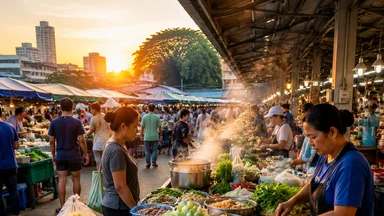
Bangkok's street-stall scene is a study in temporal arbitrage. The same bowl of boat noodles that costs 100 baht at a Yaowarat dinner stall might go for 50 baht at a morning market stall a few hours earlier. The difference isn't just price—it's freshness, crowd density, and payment logistics. After a week of testing both ends of the clock, the math clearly favors the early bird, but only if you know where to look and what to skip.
The 5 AM Price Gap: Why Early Birds Pay Less for the Same Bowl
The most persistent pattern across Bangkok's food markets is the price drop before dawn. At Or Tor Kor market, which starts stirring around 4 AM, vendors often discount items to move stock that arrived fresh from the farms hours earlier. A serving of jok (rice porridge) that goes for 80 baht at a dinner stall in the same neighborhood might cost 40 baht before 7 AM. The discount isn't uniform—some stalls hold prices steady—but a 2023 survey of street-food pricing by Chulalongkorn University's Faculty of Economics found that roughly 70% of stalls raise their prices after 6 PM.
The reasons are straightforward: morning customers are mostly locals buying for the day, and vendors compete on volume rather than margin. Dinner crowds, by contrast, include tourists willing to pay a premium for convenience and atmosphere. At Yaowarat, Bangkok's Chinatown, dinner dishes routinely hit 100–200 baht, while the same vendors (or their morning counterparts) charge 40–80 baht before lunch. The gap narrows for specialty items like grilled seafood, which hold higher prices throughout the day, but for everyday staples like rice soup or stir-fried greens, the morning discount is real.
Seasonal variation matters. During high tourist season (November to February), dinner prices can spike another 20–30%, while morning stalls remain relatively stable. Conversely, during the rainy season (June to October), some morning vendors close early or skip days, reducing the window. The best approach is to check two or three stalls before committing—prices can differ by 10–20 baht even within the same market.
One caveat: not all morning stalls are bargains. Stalls inside tourist-heavy markets like Chatuchak weekend market have fixed prices that barely fluctuate. The real deals are at neighborhood markets like Khlong Toei or Or Tor Kor, where vendors cater to locals and competition keeps margins thin.
Cash-Only Reality: Cards Fail at 90% of Morning Stalls
Bangkok's street stalls operate overwhelmingly on cash, especially before 8 AM. A 2024 survey by the Foundation for Consumers (a Thai consumer advocacy NGO) estimated that fewer than 10% of morning stalls accept any form of electronic payment, and those that do often rely on PromptPay QR codes that require a Thai bank account. Foreign tourists with Visa or Mastercard will find almost no acceptance. The exception is a handful of stalls at Or Tor Kor that have begun accepting international credit cards, but these are rare and often marked by prominent signage.
ATMs near markets charge around 220 baht per foreign transaction, a fee that eats into any savings from morning pricing. The workaround is to withdraw larger sums less frequently—say, 10,000 baht at a time—and carry small bills. Vendors routinely lack change for 1,000-baht notes, especially early in the morning when they haven't made many sales yet. A stack of 20, 50, and 100 baht notes is essential.
Tourist SIM cards don't enable Thai mobile payment apps like TrueMoney or Rabbit Line Pay, which require a local ID or bank account. Some tourists have reported success with Wise or Revolut cards at a few stalls, but these are outliers. The safest assumption is that any stall without a visible card terminal runs on cash only. For a week of morning runs, budget around 1,500–2,000 baht in small bills.
One emerging trend is the use of QR codes linked to international payment apps like Alipay, which is accepted at some tourist-oriented stalls. But Alipay penetration remains low in morning markets, where the customer base is predominantly Thai. Until that changes, cash is the only reliable medium.
Hygiene Signals Locals Trust (And What Tourists Misread)
Hygiene concerns often deter tourists from morning stalls, but locals use a different set of cues than the ones listed in guidebooks. The most reliable signal is ice: factory-made block ice with a hole in the center indicates it was produced under regulated conditions, while crushed ice from unknown sources may carry contaminants. Morning stalls typically use block ice because it lasts longer in coolers. Dinner stalls, especially those serving drinks, often switch to crushed ice that melts faster—and may come from less reliable suppliers.
Another cue is running water. Stalls with a dedicated sink for washing utensils and a separate basin for rinsing vegetables show a higher level of care. Many morning stalls at Or Tor Kor have plumbing, while dinner stalls on side streets sometimes rely on buckets of water that get reused throughout the evening. Similarly, food coverings matter: mesh or glass shields that keep flies off are a good sign; a towel draped over a bowl is not.
Cutting board hygiene is critical. Avoid stalls where raw meat and cooked foods share the same board, a common sight at dinner stalls during peak hours. Morning stalls, because they handle less volume, are more likely to use separate boards or clean them between uses. The fresher ingredients that arrive at dawn also mean less time for bacteria to grow—a clear advantage for early meals.
One local trick: watch how vendors handle money. If they touch cash and then food without washing or using gloves, it's a red flag regardless of the time of day. Morning stalls tend to be less rushed, so they may be more careful, but it's not guaranteed. Trust your nose, too—if the stall smells strongly of stale oil or fish, move on.
Menu Math: What to Order Before 7 AM vs. What to Skip
Not all dishes benefit from the morning window. The best bets before 7 AM are made-to-order items that rely on fresh ingredients: jok (rice porridge), khao tom (rice soup), fresh fruit smoothies, and omelets. These dishes are prepared in small batches and often use ingredients that arrived at the market that morning. Grilled sticky rice and roti are also excellent early choices, as they're cooked to order and don't sit around.
What to skip before 7 AM: fried noodles, especially pad Thai or pad see ew. Many morning stalls use oil that was reused from the previous day, which can impart a stale flavor and a heavier texture. Grilled meats, unless you see them being cooked over a live fire, are often reheated from the night before. Curries and stews, which benefit from slow cooking, are actually better in the evening when they've had hours to develop flavor.
Dinner-only specialties like grilled seafood (pla pao, grilled squid) are best after 3 PM, when the catch is fresh and the charcoal is hot. Morning versions of these dishes are often pre-cooked and reheated, losing texture and taste. Similarly, deep-fried items like spring rolls or tempura should be avoided in the morning—the oil is rarely changed daily.
Price ranges reinforce the pattern: a morning meal of jok with egg and a side of fried dough costs 30–60 baht, while the same items at dinner in a tourist zone run 80–150 baht. A fresh fruit smoothie made with yogurt and honey is 40–50 baht in the morning versus 60–80 baht at night. The savings add up quickly if you plan your day around the morning window.
Logistics of the 5 AM Run: Transport, Timing, and Crowds
Getting to Bangkok's morning markets requires some planning. The BTS and MRT start service around 5:30–6 AM, which means the earliest you can arrive at a market like Or Tor Kor via public transport is about 6:15 AM. For the true 5 AM window, you'll need a taxi or motorbike taxi. A Grab taxi from central Bangkok to Or Tor Kor costs roughly 100–150 baht before 6 AM, depending on distance and surge pricing. Motorbike taxis are cheaper (40–80 baht) but less comfortable with groceries.
Crowds are thin until 7 AM, making the 5:30–7 AM window the sweet spot. After 8 AM, lines form at popular stalls, especially for jok and khao tom. The heat also becomes a factor—by 9 AM, Bangkok's humidity makes eating outdoors less pleasant. The ideal routine: arrive at the market by 5:30–6 AM, eat by 7 AM, and leave before the crowds and heat build.
Morning markets like Or Tor Kor and Khlong Toei have dedicated early hours, but not all stalls are open. At Or Tor Kor, the prepared food section starts filling up around 5 AM, while the produce section is active from 4 AM. Khlong Toei, Bangkok's largest fresh market, is busiest between 3 AM and 7 AM, after which many stalls close or transition to wholesale. Check the market's schedule online or ask a hotel concierge—some markets have rest days or reduced hours during holidays.
One logistical hack: combine your morning market visit with a nearby temple or park. Many markets are within walking distance of landmarks like the Golden Mount or Lumpini Park, allowing you to make the most of the early start without backtracking.
The Dinner Trap: Premium Prices, Reheated Food, and Tourist Markups
Dinner street food in Bangkok's tourist zones—Khao San Road, Yaowarat, and Sukhumvit sois—comes with a built-in markup of 20–50% compared to equivalent dishes in local neighborhoods. A plate of pad Thai that costs 50 baht at a stall in Nonthaburi might be 120 baht on Khao San. The premium isn't just for location; it also covers the cost of English menus, picture boards, and commission fees paid to touts.
Quality often suffers at dinner because many stalls pre-cook batches during the afternoon and reheat them to order. Stir-fried dishes that were crisp at lunch become soggy by 8 PM. Grilled meats that were juicy at 4 PM dry out under heat lamps. The ice used in drinks at dinner stalls often comes from bulk bags with unknown sourcing—a contrast to the block ice of morning markets. A 2022 study by Mahidol University's Faculty of Public Health, titled "Microbiological Quality of Street Food Contact Surfaces in Bangkok," found that bacterial counts on food contact surfaces at dinner stalls were significantly higher than at morning stalls, likely due to longer operating hours and less frequent cleaning.
Tourist-heavy areas also have a higher risk of stomach issues. Food sits longer in the heat, and the turnover of customers means dishes may be left out for hours. The local rule of thumb: if a stall has an English menu and pictures, expect higher prices and potentially lower quality. That's not always true—some excellent stalls cater to tourists without cutting corners—but it's a useful heuristic.
One counter-argument: dinner is when Bangkok's street food culture is most vibrant. The energy of Yaowarat at night, with its glowing signs and crowded sidewalks, is an experience that morning markets can't replicate. For some travelers, the premium is worth paying for the atmosphere alone. But if your priority is value and freshness, the morning shift wins every time.
One Week of Morning Runs: A Sample Budget Breakdown
To put the math in concrete terms, consider a week of eating exclusively at morning stalls versus a week of dinner-only street food. For seven breakfasts at morning stalls, budget 30–60 baht per meal, or 210–420 baht total. For seven dinners at evening stalls, budget 80–150 baht per meal, or 560–1,050 baht. The savings from the morning strategy amount to roughly 350–630 baht per week—enough for a nice meal or a few taxi rides.
But the morning strategy requires extra transport. Seven extra taxi rides at 100–150 baht each add 700–1,050 baht, which could wipe out the savings. However, most travelers would combine the morning market visit with other activities, reducing the number of dedicated trips. If you go to the market twice a week instead of daily, the transport cost drops to 200–300 baht, leaving a net savings of 50–330 baht. Not huge, but the real benefits are fresher food and fewer crowds.
For a longer stay of two weeks or more, the savings accumulate. A month of morning runs could save 1,400–2,520 baht on food alone, minus transport. Plus, you avoid the tourist markups at dinner stalls in prime areas. The trade-off is waking up early and planning your route, but for budget-conscious travelers, the arithmetic is clear.
If you're interested in similar cost-saving strategies for other destinations, check out our article on Nepal rupee exchange spreads or the California hostel math piece. Both follow the same principle: small timing and location shifts can yield outsized savings.
Not Everyone Should Wake Up at 5 AM: A Counter-Argument
The morning market strategy isn't universally superior. For travelers staying in remote hotels without easy taxi access, the early start adds stress and cost. Families with young children may find dinner stalls more practical, as kids often resist early wake-ups. And for those who value social dining, the night market scene offers camaraderie that morning solitude cannot match.
Some morning stalls also have limited variety. At Or Tor Kor, the prepared food section is smaller than the produce area, so options for a full meal may be fewer than at a bustling dinner market. Vegetarians and vegans might struggle to find protein-rich options before 7 AM, as tofu and mock meats are less common in the early hours.
Another factor: weather. During the rainy season, morning downpours can disrupt market visits, with some vendors closing early or not opening at all. Dinner stalls, by contrast, often operate under covered walkways or awnings that provide shelter. Checking the forecast is essential if you plan to rely on morning markets.
Ultimately, the choice depends on your priorities. If saving money and eating fresh food matter most, the 5 AM run is worth the effort. But if convenience, atmosphere, or sleep are higher on your list, dinner stalls remain a valid option—just be prepared to pay a premium and accept slightly lower freshness. The data, such as it is, supports the early bird for value, but the night owl has its own charms.