Germany Airport Transit Visa Rule Trips Schengen Travelers by Nationality Tier
A traveler books a flight from Istanbul to New York with a three-hour layover in Frankfurt. At the check-in counter in Istanbul, the agent asks for their German transit visa. They do not have one. They are not planning to leave the airport. They hold an Afghan passport. The agent shakes their head. They are not boarding.
This scenario plays out several times a week at airports around the world. The Germany airport transit visa (ATV) rule is a quietly enforced regulation that divides travelers into three nationality tiers. Most travel coverage—from glossy magazines like Condé Nast Traveler to points-and-miles blogs like The Points Guy—skips the nuance entirely. They say "you need a Schengen visa" or "transit is seamless." Neither is accurate for everyone.
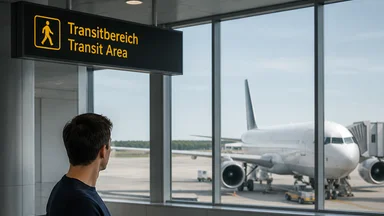
The ATV is not a full Schengen visa. It permits you to wait in the international transit zone of a German airport for a connecting flight to a non-Schengen country. You cannot pass through passport control. You cannot leave the terminal. For passport holders from roughly two dozen countries, this limited permission requires a separate application, a fee, and advance planning.
Why Germany's Airport Transit Visa Catches Even Seasoned Travelers Off Guard
The confusion starts with the Schengen Area itself. Many travelers assume that because Germany is part of Schengen, any layover in a German airport is the same as a layover in, say, Paris or Amsterdam. That is not true. Each Schengen country sets its own airport transit visa rules. Germany's list of nationalities that require an ATV is longer than France's or Italy's. It is updated annually, usually in January, and the changes are not widely publicized.
Guidebooks and travel websites rarely mention the ATV. A recent feature in Condé Nast Traveler about a trip to Marrakech covered artisan workshops and tagine cooking but said nothing about transit visa requirements for readers who might connect through a German hub en route to Morocco. That omission is common. The assumption is that if you are flying from one non-Schengen country to another, you do not need any visa for a short layover. For many nationalities, that is correct. For others, it is a costly mistake.
The consequence is not a fine or a warning. It is a denied boarding. Airlines are liable to carry passengers without proper documentation, and they face penalties. So they check—sometimes too late. A traveler holding a Pakistani passport, for instance, might be allowed to check in online, only to be stopped at the gate in Dubai. The flight leaves without them. The ticket is forfeit.
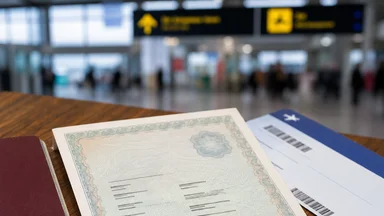
The ATV application itself is not complicated. It requires a completed form, a passport photo, proof of onward travel, and a fee of roughly €80. Processing takes two to four weeks. But the catch is that many travelers do not know they need one until they are at the airport. By then, it is too late.
The Three-Tier Nationality System That Dictates Your Layover
Germany's system sorts passport holders into three tiers. Tier 1 includes nationals of EU/EEA countries, Switzerland, the United Kingdom, the United States, Canada, Japan, South Korea, Australia, New Zealand, and about 60 other countries. These travelers do not need any visa for transit through a German airport. They can also enter the Schengen Area visa-free for short stays.
Tier 2 is the ATV-required list. As of early 2026, that list includes Afghanistan, Bangladesh, Eritrea, Ethiopia, Ghana, India, Iran, Iraq, Jordan, Lebanon, Mali, Morocco, Nigeria, Pakistan, Senegal, Somalia, South Sudan, Sri Lanka, Sudan, Syria, Togo, Tunisia, Turkey, Uganda, and Yemen. Passport holders from these countries must apply for an airport transit visa before traveling, even if they never leave the transit area. There are exceptions for holders of certain residence permits or valid visas from Schengen countries, the US, Canada, Japan, or the UK, but the exceptions are narrow and checked carefully by airline staff.
Tier 3 consists of a handful of countries—notably Syria and Eritrea—whose nationals need a full Schengen visa even for airport transit. A full visa application is more expensive, requires more documentation, and takes longer. This tier is often misunderstood even by airline check-in agents, who may confuse it with the ATV requirement.
The official list is maintained by the German Federal Foreign Office and is available online in German and English. But it is not prominently featured on travel booking sites. A traveler searching "Do I need a visa for a layover in Frankfurt?" might land on a third-party blog that says "Schengen transit is visa-free for most nationalities." That is misleading. The distinction between "most" and "all" is exactly where the problem lies.
Frankfurt and Munich: The Two Busiest Transit Bottlenecks
Frankfurt Airport (FRA) is the busiest passenger hub in Germany and one of the busiest in Europe. It handles roughly 60 million passengers annually, a large share of whom are connecting between long-haul flights. The airport has two main terminal complexes, with the Z gates in Terminal 1 serving non-Schengen flights. Travelers transiting through Frankfurt must remain in the non-Schengen area, which is physically separate from the Schengen concourses. If you accidentally walk toward the Schengen exit, you will encounter passport control and cannot return without an entry visa.
Munich Airport (MUC) is the second busiest, with about 40 million passengers per year. Its Terminal 2, shared with Lufthansa, has a layout that can confuse transit passengers. The non-Schengen gates are on the upper level, but some connecting flights require a shuttle bus that drops passengers in the Schengen zone. In that case, you must pass through passport control. Without a valid visa, you are stuck.
Airlines bear responsibility for checking documents before boarding the first leg. But enforcement is inconsistent. A traveler flying from Lagos to Munich on Lufthansa might be checked thoroughly in Lagos, while the same traveler flying from Accra to Frankfurt on a different carrier might not be checked until they reach the gate in Accra. By then, the airline has already issued a boarding pass. The gate agent's denial feels arbitrary, but it is based on the carrier's interpretation of the rules.
The Points Guy's recent coverage of Air Canada's A321XLR inaugural flight focused on seat comfort and fuel efficiency, not on transit visa rules for passengers connecting through Frankfurt to other destinations. That is typical of aviation journalism: the hardware gets the attention, the paperwork does not.
Paperwork Pitfalls That Derail Connections
Even travelers who know they need an ATV sometimes make mistakes that lead to denial. The most common pitfall is assuming that a valid residence permit from another Schengen country exempts you from the ATV requirement. It does, but only if the permit is still valid and the traveler is returning to that country. An expired permit, even if the renewal is pending, is not accepted. A traveler holding a French residence permit that expired two weeks ago will likely be denied boarding for a transit through Frankfurt.
Another frequent error involves onward ticket proof. The ATV application requires evidence of a booked onward flight to a non-Schengen destination. Some travelers submit a reservation that is not ticketed, or a flight that departs more than 24 hours after arrival. The German authorities consider a layover longer than 24 hours as a stopover, which requires a full Schengen visa. Airlines also check this at check-in.
Misunderstanding the difference between "airport transit" and "entry" is also common. A traveler with an ATV cannot leave the transit area. If their connecting flight is delayed and the airline rebooks them on a flight departing the next day, they cannot go to a hotel unless they have a full Schengen visa. The airline may provide a transit hotel inside the secure zone, but that is not guaranteed. Some travelers have spent the night on benches in the transit area, unable to enter Germany.
Delta's recent AI-driven personalized pricing, covered by Vox, is irrelevant to visa issues but illustrates how travel media focuses on pricing innovation while ignoring the regulatory barriers that actually prevent people from flying. The cost of a ticket matters little if you cannot board the plane.
Why Travel Blogs Get Germany Transit Rules Wrong
The typical travel blog post about "Schengen visa requirements" lumps all Schengen countries together and says something like "most nationalities need a visa to enter the Schengen Area." That is true for entry, but it misses the transit nuance. A traveler from India does not need a full Schengen visa for a four-hour layover in Frankfurt—they need only an ATV. But many blogs do not mention ATVs at all. A quick search yields dozens of articles titled "Do I need a visa for a layover in Germany?" that answer with a generic "depends on your passport" without linking to the official list.
Vox's travel coverage tends to focus on airline economics and consumer rights, not on the granular visa rules that affect specific nationalities. That gap is understandable—visa rules are dry and change frequently—but it leaves readers underinformed. The same is true for Condé Nast Traveler, which recently ran a feature on a Sicilian villa where Dua Lipa celebrated her wedding. The article is lovely, but it does not help the reader who needs to know whether their Moroccan passport requires an ATV for a connection through Munich to Palermo.
The problem is not that these outlets are wrong. It is that they are incomplete. A traveler holding a Nigerian passport who reads a generic "Schengen visa needed" guide might overcorrect and apply for a full Schengen visa, spending €80 and weeks of waiting, when an ATV would have sufficed. Or they might assume no visa is needed and get denied at the airport.
Third-party visa information sites are often outdated. A blog post from 2022 might list a different set of countries than the current 2026 list. The German Foreign Office updates its ATV list each January, and changes can be subtle—a country added, a country removed. Relying on a cached page is risky.
How to Check Your Nationality Tier Before Booking
The most reliable source is the German Federal Foreign Office website. The page titled "Airport transit visa" lists all affected nationalities and the exceptions. It is available in English. Do not rely on a third-party visa service or a travel forum. Even airline websites sometimes display an abbreviated or outdated list.
When you search for a flight, the booking engine usually shows a note about visa requirements. But that note is generated by a third-party database and may not include the ATV distinction. For example, the booking site might say "visa required for transit" for an Indian passport holder, without specifying that an ATV is sufficient. That can lead the traveler to either overpay for a full visa or ignore the warning entirely.
If your country is borderline—for example, if you hold a passport from a country that is not on the ATV list but is often confused with one—call the German embassy or consulate in your country of residence. Ask specifically about airport transit. Do not ask a general question about "Schengen visas." The staff at the visa section will give you the correct answer.
Book a flexible ticket whenever possible. If you are denied boarding due to a visa issue, most airlines will not refund the ticket. A flexible fare costs more, but it protects you if the rules change or if you misjudged your requirements. Some airlines allow rebooking for a fee, but that fee can be as high as the ticket price itself.
Carry printed copies of your ATV approval, your onward ticket, and any residence permits or visas that might qualify you for an exception. Digital copies on a phone are often accepted, but if your phone battery dies or the screen is damaged, you will have no proof. A printed folder is cheap insurance.
Real-World Cases: When the Rules Hit Hard
Consider the case of a Ghanaian student traveling from Accra to Seoul via Frankfurt. The student held a valid US student visa, which is one of the exceptions that exempts Tier 2 nationals from needing an ATV. However, the airline check-in agent in Accra was unfamiliar with the exception and denied boarding. The student missed the flight, lost the ticket, and had to rebook at a higher fare. The agent had misinterpreted the rule, but the traveler bore the cost. This highlights the importance of carrying printed documentation of the exception—specifically, the German Foreign Office page that lists accepted visas—and being prepared to explain the rule to airline staff.
Another case involves a Nigerian businessman flying from Lagos to Dubai via Munich. He had applied for and received an ATV, but his connecting flight was delayed by 10 hours, pushing his layover beyond 24 hours. Under German rules, a layover exceeding 24 hours is considered a stopover and requires a full Schengen visa. The airline rebooked him on a flight the next day, but he could not leave the transit area. He spent the night in the terminal, unable to enter Germany. The lesson: if your layover is close to 24 hours, consider whether it might be extended, and if so, apply for a full Schengen visa instead of an ATV.
A third case: a Turkish couple traveling from Istanbul to New York with a layover in Frankfurt. They held Turkish passports and were aware of the ATV requirement. They applied in advance and received their ATVs. However, at check-in, the agent asked for proof of onward travel from New York—a visa or ESTA for the US. The couple had ESTA approvals, but they had not printed them. The agent insisted on seeing a physical copy. After a tense 20 minutes, the couple retrieved the documents from their email on a phone with weak signal. They boarded just in time. The takeaway: always carry printed copies of all travel documents, not just the ATV.
These cases illustrate that even when travelers know the rules, enforcement can be uneven. The ATV itself is straightforward, but the exceptions, the interpretation by airline staff, and the logistics of layovers create pitfalls. The best defense is preparation: know your tier, carry all documents in print, and verify with the airline before departure.
How Germany Compares to Other Schengen Countries
Germany's ATV list is among the longest in the Schengen Area. For comparison, France requires an ATV for nationals of about 15 countries—mostly African and Asian nations—while Italy's list is even shorter. The Netherlands and Belgium have lists similar in length to Germany's, but they are less frequently used as transit hubs. Switzerland, not an EU member but part of Schengen, requires ATVs for a similar set of countries but has fewer transit passengers.
This inconsistency means that a traveler from Morocco, for example, can transit through Paris without any visa, but needs an ATV for a transit through Frankfurt or Munich. A traveler from India can transit through Amsterdam without a visa, but needs an ATV for a German transit. These differences are rarely explained on booking sites, which often display a generic "Schengen transit" message.
For travelers connecting through multiple Schengen airports—say, flying from Lagos to Berlin via Frankfurt and then on to Stockholm—the rules become even more complex. The first point of entry into Schengen (Frankfurt) determines the visa requirements. If you need an ATV for Germany, you must have one, even if your final destination is in another Schengen country. However, the ATV only permits you to stay in the transit area; if you need to change terminals or pass through passport control to reach your connecting flight, you may need a full Schengen visa. This nuance is often missed by travelers and even by airline staff.
The German government has considered aligning its ATV list with the EU's common list, but as of 2026, it maintains its own. Travelers should not assume that rules for one Schengen country apply to all.
Practical Steps to Avoid Denial
First, check your nationality against the official German Federal Foreign Office list at least six weeks before travel. If you need an ATV, apply immediately. The processing time is typically two to four weeks, but can be longer during peak travel seasons. Use the embassy's online portal or schedule an appointment in person. Do not wait until the last minute.
Second, verify your airline's policy. Some airlines, particularly Lufthansa and its subsidiaries, have stricter enforcement than others. Call the airline's customer service and ask specifically: "Do I need an airport transit visa for a layover in Frankfurt?" Provide your nationality and passport details. Record the date, time, and name of the representative. If the airline gives incorrect information, you may have recourse later.
Third, if you qualify for an exception—for example, you hold a valid US visa or a residence permit from a Schengen country—carry the original document and a printed copy of the relevant exception from the German Foreign Office website. Be prepared to show it at check-in and at the gate. Some airline agents are not trained on exceptions, so you may need to educate them politely.
Fourth, consider your layover duration. If your layover is more than 12 hours, or if you have any reason to believe it might be extended (e.g., winter weather at Frankfurt), apply for a full Schengen visa instead of an ATV. The full visa costs more and requires more documentation, but it allows you to leave the airport, stay in a hotel, and handle delays without stress.
Fifth, book a refundable or flexible ticket if possible. The extra cost is insurance against visa-related denial. Some airlines offer a 24-hour risk-free cancellation period; use that window to verify your visa requirements.
Sixth, join travel forums like FlyerTalk or TripAdvisor where travelers share recent experiences. A post from someone with your nationality who transited through Frankfurt last month can give you a realistic picture of what to expect. However, take anecdotal reports with caution—rules and enforcement change.
The Bottom Line for Transit Passengers Through Germany
Germany's airport transit visa rule is a rare case where the regulatory framework is more nuanced than most travelers expect. The three-tier nationality system means that two passengers on the same flight can have completely different document requirements. One might breeze through, the other might be turned away.
The travel industry has not caught up. Airlines, booking sites, and travel media all tend to simplify visa rules to the point of inaccuracy. The result is that the burden falls on the individual traveler to research their specific nationality tier before booking. That is not ideal, but it is the reality.
Always verify your nationality tier before booking. If you are planning a trip that involves a connection through Frankfurt, Munich, or any other German airport, assume nothing. Check the official list. Verify with the airline. Carry the right documents. The ATV is not a difficult visa to obtain—it just requires knowing that you need one. The worst mistake is not the application. It is the surprise at the check-in counter.
For more on how visa rules vary by nationality at specific airports, see our piece on Rwanda visa on arrival fees and how lodging prices surge during events like the Takayama Festival. Understanding these patterns helps you plan around the hidden costs of travel.