Lisbon Neighbourhood Transit Math Favors Alvalade Short-Lets Over Baixa Hostel Bunks
A first-time visitor to Lisbon lands at the airport, opens a booking app, and sees the familiar pattern: a dorm bunk in Baixa for €35, a studio in Alvalade for €60. The natural instinct is to pick the cheaper option, closer to the action. But that instinct ignores the math of time, noise, and hidden costs that can make the Alvalade short-let the smarter choice for anyone who values sleep and a functioning kitchen.
The Short-Let Math That Flips the Hostel Equation
Baixa hostels charge roughly €30 to €45 per bunk per night, depending on season and dorm size. Alvalade short-lets—booked through platforms like StayPortugal or Airbnb—run €50 to €70 for a private studio or one-bedroom apartment. The nightly gap is perhaps €20 to €25. But that gap shrinks fast when you factor in what each option includes.
A short-let comes with a fully equipped kitchen. Supermarket prices in Alvalade are roughly 30 percent lower than in tourist-heavy Baixa or Chiado. A traveller who cooks two meals a day saves €8 to €12 per meal compared to eating out. Over a week, that saving alone can reach €100 or more, completely offsetting the higher nightly rate.
Then there is laundry. Hostels often charge €8 to €12 for a wash-and-dry service, and finding a self-service laundromat in Baixa means hauling clothes through cobbled streets. A short-let with a washing machine eliminates that cost entirely. Over a five-night stay, that is €40 to €60 saved.
The transit pass adds roughly €1 to €2 per trip on the metro or bus. Alvalade sits on the green metro line, three stops from Rossio and about 12 minutes from the city centre. A weekly public transport pass costs around €10 to €15, a fraction of what a traveller might spend on a single taxi ride from Baixa to Belém.
The dorm trade-off also involves intangibles: no lockout hours, no dormitory snoring, no sharing a bathroom with eight strangers. For a light sleeper, the short-let's quiet pays for itself in rest alone.
Why Baixa Hostels Look Cheap but Cost Time
Baixa hostels advertise their location as a selling point: walk to everything. That is true for the Alfama, Chiado, and the waterfront. But walkability comes with a noise premium. Bars and trams run until late, and the narrow streets amplify sound. A dorm bunk near Rua Augusta might cost €35, but getting a full night's sleep is not guaranteed.
Shared bathrooms mean morning queues. In a 10-bed dorm with one toilet and one shower, the wait at 8 AM can stretch 15 to 20 minutes. That adds up over a week. Short-lets in Alvalade typically have a private bathroom, no queue.
Check-in at many budget hostels is delayed until 3 PM or later, and early arrivals must store luggage in a locker or a crowded room. Short-let hosts often allow early bag drop or key pickup from a lockbox, giving the traveller more flexibility.
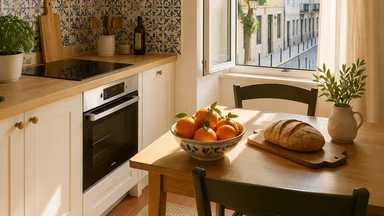
Kitchen access in hostels is often limited to certain hours or equipped with a single hot plate and a small fridge. Cooking a proper meal requires timing and patience. Short-lets have full kitchens with hobs, ovens, and ample counter space, making self-catering practical rather than frustrating.
Laundry, as mentioned, is an added expense and a logistical chore. Some hostels do not offer laundry at all, forcing guests to find a nearby lavandaria. The time spent walking, waiting, and paying for a wash cycle could be spent exploring the city.
Alvalade's Transit Advantage in Real Minutes
Alvalade is a residential neighbourhood about four kilometres north of the historic centre. The metro station Alvalade sits on the green line, which connects directly to Rossio (the main square) in roughly 12 minutes. The same line runs to Cais do Sodré, the train and ferry hub, in under 20 minutes.
Bus 727 runs every 8 to 15 minutes and links Alvalade to Campo de Ourique, Estrela, and the Alcântara area. For destinations off the metro grid, the bus fills the gap without requiring a transfer through the city centre.
The airport connection is direct: take the green line from Alvalade to São Sebastião, switch to the red line, and arrive at Aeroporto in about 20 minutes total. No cobblestone hauling, no steep hills, no luggage-struggle up the Baixa chiado incline.
For travellers who plan to explore Belém or the coast, the train from Cais do Sodré runs every 20 minutes to Cascais, with stops at Belém and Oeiras. From Alvalade, the journey to Cais do Sodré is a single metro ride, about 18 minutes.
The metro operates from 6:30 AM to 1 AM, covering most tourist schedules. After 1 AM, night buses run roughly every 30 minutes along major routes, including the 208 that passes near Alvalade. A late night out in Bairro Alto still gets you home without a €15 taxi.
The Guesthouse Trap Between Price and Peace
Some travellers consider guesthouses in Graça or Alfama as a middle ground between hostels and short-lets. These charge roughly €40 to €60 per double room, sometimes with breakfast included. But the trade-off is often physical: steep hills that wear down legs after two days of walking.
Most guesthouses in Graça occupy 19th-century buildings without elevators. Carrying luggage up three or four flights of stairs is common. For a week-long stay, that becomes a daily burden. The breakfast included is often minimal—bread, butter, jam, coffee—not enough to replace a full meal.
The host in mid-range guesthouses often lives off-site or visits only during check-in hours. If a problem arises—a broken shower, a lost key—the response can be slow. Short-lets in Alvalade typically have a local host or management company reachable by phone within minutes.
Guesthouse walls in old buildings are thin. Neighbour noise from adjacent apartments or street traffic penetrates easily. Earplugs help with noise but not with bed comfort; many guesthouse mattresses are older and softer than the firm beds found in newer short-let apartments.
The price per night of a guesthouse double, when split between two people, can be lower than a short-let studio. But for a solo traveller, the short-let often matches or beats the guesthouse on space and amenities. The solo traveller pays the same for a private room either way, but gets a kitchen and washing machine in the short-let.
Self-Catering Economics: The Kitchen Factor
A short-let's kitchen is not just a convenience; it is a budget tool. Lisbon's supermarkets—Pingo Doce, Continente, Lidl—offer fresh produce, bread, cheese, and wine at prices that make eating out look extravagant. A bag of oranges costs around €1.50, a loaf of good bread €1.20, a bottle of table wine €3 to €5.
Breakfast in a café costs €5 to €8 for a coffee and a pastry. Lunch at a típico restaurant runs €10 to €15 for a prato do dia. Dinner with a drink can hit €20 to €30. A self-catered day—breakfast at home, packed lunch for a picnic, dinner cooked in the apartment—costs roughly €8 to €12 per person.
Over a five-night stay, the savings from self-catering can reach €60 to €100 per person. That more than covers the nightly premium of the short-let over the hostel bunk. For two people sharing a studio, the savings double.
The short-let also allows for flexible meal timing. A traveller who prefers a late breakfast or an early dinner is not constrained by hostel kitchen hours or restaurant service times. The fridge holds leftovers for the next day.
Alvalade has several supermarkets within a five-minute walk of the metro station. The neighbourhood market, Mercado de Alvalade, sells fresh fish, meat, and vegetables on weekday mornings. It is a local spot, not a tourist attraction, so prices are fair.
The Noise vs. Distance Trade-off Most Travellers Miss
Baixa's central location comes with a soundscape of trams, tour groups, and bar patrons that hums until 2 AM even on weeknights. Hostel dormitories often face the street, and double-glazed windows are rare in older buildings. Earplugs block some noise but do little to stop bed shaking from a late-returning roommate.
Alvalade residential streets quiet down after 10 PM. The neighbourhood is mostly local families and older residents. A short-let on a side street like Rua José D'Esaguy or Avenida de Roma offers near-silence at night. Windows in newer buildings are double-glazed, further reducing street noise.
The metro stops running around 1 AM, but night buses fill the gap. The 208 night bus runs from downtown to Alvalade roughly every 30 minutes. A taxi from Bairro Alto to Alvalade costs around €10 to €15, a price worth paying for a few late nights out, but still less than the cumulative cost of a Baixa hostel's noise tax.
For travellers who value a good night's sleep over a five-minute walk to the nearest bar, the trade-off is clear. The 12-minute metro ride from Alvalade to Rossio is barely longer than the walk from a Baixa hostel to the same bar, and the quiet is priceless.
Some argue that Baixa's energy is part of the experience, and they are not wrong. A traveller on a short city break who plans to be out until closing time every night might not care about noise. But for a week-long stay, or for anyone who works remotely during the day, Alvalade's calm is an asset.
Packing for the Transit-First Neighbourhood Strategy
Choosing Alvalade changes how you pack. The metro has lifts at most stations, including Alvalade, so a carry-on roller suitcase works fine. In Baixa, many hostels are up narrow staircases, and the cobblestones on the Rua Augusta pedestrian zone destroy spinner wheels. A backpack is preferable for Baixa; a roller is fine for Alvalade.
Lisbon's weather can shift quickly, and the metro temperature swings between hot platforms and air-conditioned trains. Layers are essential: a light jacket or cardigan that can be tied around the waist. The short-let's closet offers space to hang damp clothes, something a hostel locker cannot provide.
Leave bulky items like a hairdryer or extra toiletries at the short-let. The apartment has storage, and you do not need to carry them daily. A daypack with water, a map, and a snack is sufficient for exploring.
If you plan to cook, pack a small reusable bag for groceries. Supermarkets in Portugal charge for plastic bags. A lightweight tote or foldable backpack saves a few cents each trip.
The short-let's washing machine means you can pack fewer clothes and wash mid-trip. That lightens the load and reduces checked-baggage fees if flying a budget airline. A week's worth of clothes fits in a 40-litre carry-on.
Counter-Argument: When Baixa Hostels Still Win
Not every traveller benefits from the Alvalade short-let equation. A weekend tripper staying two nights, spending most waking hours outside, and eating all meals on the go might not save enough on food or laundry to offset the higher nightly rate. For that traveller, a Baixa bunk at €35 per night is simpler and cheaper.
Solo travellers who prefer socialising in hostel common rooms may find the short-let isolating. Alvalade is residential; its bars and cafés are local, not tourist-oriented. Meeting other travellers requires effort—joining a walking tour or using apps—rather than just walking downstairs.
Families or groups of three or four might find that short-lets in Alvalade with multiple bedrooms are scarce or priced high. A hostel with private family rooms in Baixa could be more cost-effective, especially if the group splits costs.
Travellers with mobility issues should note that while Alvalade metro has lifts, some short-let apartments are on upper floors without elevators. Baixa hostels, despite their stairs, often have ground-floor dormitories. Checking the building details before booking is essential.
The weather also plays a role. In winter, the 12-minute walk from Alvalade metro to the short-let might be in rain or cold wind. Baixa's concentration of attractions means less time outdoors in unpleasant conditions. A traveller in November might prefer the shelter of a central location.
Finally, the short-let requires advance planning: booking a week or more ahead to secure a good price, coordinating key pickup, and buying groceries upon arrival. A hostel can be booked the night before with a smartphone, and everything is provided. For spontaneous travellers, that convenience has value.
Extended Stay Scenarios: The Weekly and Monthly Math
For stays of two weeks or more, the short-let advantage grows. Weekly rates on Alvalade short-lets often drop to €250 to €350, bringing the nightly cost to €35 to €50—comparable to a hostel bunk. Monthly rates can fall further to €700 to €900, or roughly €23 to €30 per night, undercutting most hostels.
Hostels rarely offer weekly discounts on dorm bunks; the nightly rate stays flat. Over 14 nights, a Baixa dorm costs €420 to €630, while an Alvalade short-let at weekly rates costs €500 to €700. The gap narrows to €80 to €70, easily erased by self-catering savings.
Laundry costs compound over longer stays. A fortnight of hostel laundry fees at €10 per wash cycle totals €20 to €40. The short-let's washing machine costs nothing after the initial rental.
Remote workers on month-long stays benefit from a desk, reliable Wi-Fi, and a quiet environment. Alvalade has several coworking spaces, like the one on Avenida de Roma, with day passes around €10 to €15. Baixa hostels have no dedicated workspace, and common areas are noisy until late.
For digital nomads, the short-let also provides a stable address for receiving mail or packages—useful for ordering a replacement charger or a local SIM card. Hostels hold mail only briefly and often charge a fee.
Final Walkthrough: A Week in Alvalade
Imagine a seven-night stay. The short-let costs €420 (€60 per night). The Baixa dorm costs €245 (€35 per night). The difference is €175. Now add daily expenses:
- Self-catered meals save €10 per day vs. eating out: €70 saved.
- Laundry: two washes at €10 each in Baixa vs. free in Alvalade: €20 saved.
- Transit: weekly pass €12 vs. three taxi rides at €10 each in Baixa: €18 saved.
- Noise-related sleep loss: hard to quantify, but a tired traveller may buy an extra coffee or skip a planned walk, costing €5 to €10 in mood and money.
Total savings from Alvalade: €70 + €20 + €18 = €108. The net premium for the short-let becomes €175 - €108 = €67, or about €9.50 per night. For that, the traveller gets a private bedroom, a full kitchen, a washing machine, and silence at night. The value is clear.
If the traveller splits the short-let with a partner, the math flips entirely: the studio at €60 split is €30 per person per night, cheaper than the hostel bunk, with all the amenities included. For couples or friends, Alvalade short-lets are a no-brainer.
For travellers arriving from a similar budget-focused trip—say, one who read about Bangkok street-stall cash math—the principle is the same: the cheapest upfront option is not always the cheapest overall. A short-let in Alvalade asks for a higher nightly rate but returns that investment in sleep, food savings, and time not wasted in queues.