After One Weekend with This Backup App, I Finally Stopped Worrying About Losing My Memories
We’ve all had that heart-sinking moment—fumbling with a wet phone, watching it die, only to realize we never backed up those precious weekend photos. I used to live in constant anxiety, fearing I’d lose everything. But last weekend changed that. With just a few taps, I secured months of memories, goals, and plans. This isn’t about tech for tech’s sake—it’s about peace of mind, family moments, and personal growth, quietly protected. I didn’t just save files; I saved feelings. And for the first time in years, I went to bed without wondering, What if I lose it all?
The Weekend That Made Me Reconsider My Digital Habits
It was a rainy Saturday morning, the kind where the sky hangs low and the kids are bouncing off the walls. I was in the kitchen, one hand stirring oatmeal, the other scrolling through photos from our beach trip last month. My daughter’s laugh in a video clip made me smile—until my phone slipped, landed in the sink, and disappeared under a splash of soapy water. I grabbed it fast, heart pounding, but the screen flickered and died. For a moment, I just stood there, dripping spoon in hand, feeling like I’d lost more than a device. I’d lost a piece of us.
That panic wasn’t just about the phone. It was about the months of memories stored inside—birthday candles, first steps, voice notes from my mom, even my handwritten grocery lists turned into digital scans. I realized then how much of my life wasn’t in photo albums or journals anymore. It was in that fragile little rectangle I carried everywhere. And I hadn’t backed any of it up. Not properly. Not recently. The fear wasn’t just technical—it was emotional. What if I couldn’t show my daughter her first words? What if the recipe I’d saved from my grandmother vanished? That weekend, I made a promise to myself: no more living on the edge of digital disaster.
What surprised me most wasn’t the near-loss of the phone. It was how much weight I’d been carrying, not knowing if my memories were safe. I didn’t realize how much mental space that anxiety took up—how often I’d hesitate before deleting a file, or how I’d double-save things in random folders just in case. That Saturday, soaked phone in a bowl of rice, I felt something shift. I wasn’t just afraid of losing data. I was tired of living in fear at all. And that’s when I started looking for a solution that didn’t feel like homework.
Why We Neglect Backup (And Why It Costs Us More Than We Think)
We all know we should back up our phones. We’ve heard it a thousand times. But how many of us actually do it regularly? I used to tell myself, I’ll do it later. Or, I don’t have time. Or, I don’t even know where to start. Sound familiar? I thought I was alone in this, but I’ve talked to so many moms, sisters, friends—women juggling work, kids, aging parents, and personal dreams—who feel the same. We’re not lazy. We’re just overwhelmed. And when your to-do list includes school pickups, dinner plans, and doctor appointments, backing up photos feels like one more thing you don’t have the energy for.
But here’s the thing I didn’t understand: neglecting backup isn’t just a tech problem. It’s a stress problem. Every time I opened my phone and saw hundreds of unsorted photos, I felt a little heavier. Every time I saved a note about a goal—like finally starting that online course or planning a family reunion—and didn’t back it up, I felt like I was tempting fate. That mental clutter, that low-level anxiety, it follows you. It shows up when you’re trying to enjoy a quiet cup of tea, or when you’re lying in bed at night, thinking about everything you haven’t done. And it steals your peace.
What finally clicked for me was realizing that backup isn’t just about storage. It’s about intentionality. It’s about saying, This matters. This moment, this dream, this voice note from my child—I want to keep it. When I started seeing backup as a form of emotional self-care, not just digital housekeeping, everything changed. It wasn’t about being tech-savvy. It was about honoring what I value. And once I saw it that way, I stopped asking, Why should I do this? And started asking, Why wouldn’t I?
How Goal Tracking Got Tied to My Weekend Routine
I’ve always been someone who sets little goals—reading a certain number of books, trying a new recipe each month, spending more time outdoors with my family. A few years ago, I started using a simple app to track these things. I’d jot down, Read 50 pages, or Took a walk with the kids, or Called my sister. At first, it felt a bit silly. But over time, those small notes became a record of how I was growing, even on the busiest days. They reminded me that progress isn’t always loud. Sometimes it’s quiet, like finishing a chapter before bed or remembering to hydrate.
Then came the day my phone crashed. I’d been so proud—five days in a row of hitting my reading goal, a new soup recipe that the kids loved, even a short meditation session. I opened the app to celebrate, and it froze. Restarted. And when it came back, everything was gone. No history. No notes. Just a blank screen. I felt gutted. It wasn’t just the data I’d lost. It was the proof that I was trying. That I was showing up for myself. That moment taught me something important: if I was going to keep tracking my growth, I needed to protect it.
That’s when I started pairing goal tracking with backup. Every Sunday night, while the house settled into quiet, I’d review my week and make sure everything was saved. At first, it was manual—exporting files, emailing them to myself, saving to a cloud folder. It worked, but it wasn’t sustainable. Then I discovered an app that could do it automatically. Now, every time I log a goal, it’s silently backed up in the background. Last weekend, after a long hike with the family, I recorded our adventure in my journal section. The next morning, my phone died again—completely dead, wouldn’t turn on. But this time, I didn’t panic. I borrowed my daughter’s tablet, logged in, and there it was. My words. My progress. My peace of mind.
The App That Changed Everything—Without Feeling Like Tech
I’ll be honest—I’m not a tech person. I don’t understand all the jargon, and I don’t want to. I just want things to work. So when I started looking for a backup solution, I needed something that didn’t feel like a science project. No complicated settings. No confusing menus. No ‘syncing errors’ that made me want to throw my phone across the room. I wanted something that just… worked. And that’s exactly what I found.
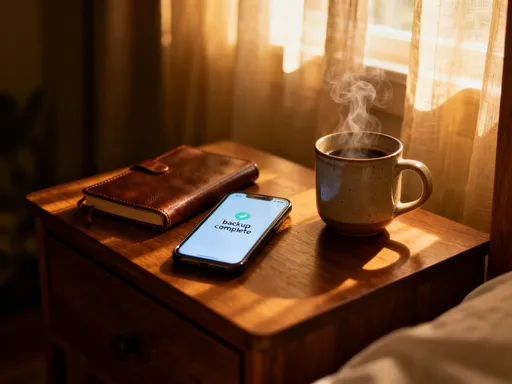
The app I started using—simple, clean, and built for real life—runs quietly in the background. I set it up once, chose what to back up (photos, notes, voice memos, goal logs), and turned on auto-sync. Now, every night while I charge my phone, it backs up everything without me lifting a finger. No notifications. No interruptions. Just a little checkmark in the morning that says, Backup complete. And let me tell you, there’s something deeply satisfying about waking up to that.
What I love most is how invisible it is. It doesn’t demand attention. It doesn’t ask me to learn new skills. It just protects what matters. I remember the first time I saw that notification after the sink incident. I laughed. Not because it was funny, but because I felt a wave of relief. For once, I wasn’t behind. I wasn’t scrambling. I was safe. And that tiny green checkmark? It felt like a win. I started telling my friends about it—not because I suddenly became a tech evangelist, but because I wanted them to feel that same quiet confidence. Because we all deserve to stop worrying and start living.
From Photos to Feelings: What I Actually Saved That Weekend
When I sat down to see what had been backed up that first weekend, I expected photos and videos. And yes, there were plenty—my son’s soccer game, a sunset from our weekend drive, a silly selfie with my sister. But what surprised me was how much more was there. A scanned copy of a handwritten note I’d made about my five-year plan. A voice memo of my daughter singing her favorite song. A playlist I’d made for early morning runs, titled ‘New Me.’ Even a screenshot of a text from my best friend that made me laugh out loud.
These weren’t just files. They were moments. Milestones. Pieces of who I am and who I’m becoming. That five-year plan note? It included dreams I’d almost forgotten—writing a book, learning to paint, taking a solo trip. Seeing it backed up, safe and organized, made me feel seen. Like someone was saying, You matter. Your dreams matter. And that playlist? It wasn’t just music. It was motivation. It was the soundtrack to the version of me I’m trying to become. Knowing it’s protected feels like a promise—to myself.
I also backed up things I hadn’t even thought about—the recipe for my grandmother’s apple pie, saved as a photo of her notebook. A video of my dog’s first snow day, where he looked so confused he sat down and stared at the ground. A note from my son that said, ‘I love you more than pizza.’ These aren’t just digital clutter. They’re the fabric of my life. And for the first time, I wasn’t afraid of losing them. I wasn’t just saving data. I was preserving connection. Identity. Love. And that changed everything.
How to Make It a Habit (Without Adding More to Your Plate)
I know what you’re thinking. Great story, but I don’t have time for one more thing. I hear you. That’s why I focus on pairing backup with habits I already have. For me, it’s bedtime. Every night, I plug in my phone. Now, that simple act is tied to backup. I don’t have to remember. It just happens. You can do the same. Maybe it’s your morning coffee, or the moment you put the kids to bed, or even your weekly grocery list. Find a routine you already do, and let backup ride along with it.
Start small. Turn on auto-backup for photos and videos. Most phones have it built in—just go to settings and enable it. Then pick one app you care about—your notes, your journal, your goal tracker—and make sure it syncs to the cloud. Don’t try to do it all at once. Progress, not perfection. I remember talking to my sister about this, and she said, ‘I don’t even know where to start.’ So I asked her, ‘What if you treated your phone like a diary that needs safeguarding?’ She paused, then said, ‘I’d probably back it up every night.’ And she did.
Another tip: choose one app and stick with it. Don’t jump between tools. Don’t overthink it. The best system is the one you actually use. And if you forget sometimes? That’s okay. This isn’t about being flawless. It’s about being kind to your future self. Think of it like locking the door at night. You don’t do it because you expect a break-in. You do it because it brings peace. Backup is the same. It’s not about fear. It’s about care.
The Quiet Confidence That Comes from Being Protected
The biggest change since I started backing up regularly isn’t that I’ve recovered lost data—though I have. It’s that I don’t live in fear anymore. I don’t clutch my phone like it’s made of glass. I don’t panic when it slips into the sink or dies mid-conversation. I know my memories are safe. My goals are secure. My little moments are preserved. And that freedom? It’s priceless.
I’m more present now. When my daughter shows me a drawing, I don’t immediately think, I need to take a photo and save it somewhere. I just enjoy it. Because I know the ones I do save are protected. When I journal at night, I write freely, without worrying that a glitch will erase my thoughts. I’m more creative, more open, more willing to try new things—because I know the record of my efforts is safe.
That quiet confidence has spilled into other parts of my life. I take more photos. I set more goals. I dream bigger. Because I know that even if the phone breaks, the moment doesn’t disappear. The love, the laughter, the progress—it’s all still there. And that’s the real gift of backup. It’s not just about technology. It’s about making space for what matters. For growth. For connection. For peace. And honestly? That’s worth every tap, every sync, every quiet night knowing I’m protected—not just digitally, but emotionally, too.