After adjusting our lights for 4 seasons, this simple routine improved our conversations more than we expected
Have you ever noticed how the same room can feel completely different depending on the time of year? We didn’t think much about it—until we started paying attention to how light shaped our moods, routines, and even the way we talk to each other. Over one full year, we tweaked our smart lighting with the seasons. What began as a small comfort upgrade quietly transformed the way my partner and I connect. It wasn’t about brightness—it was about creating space for presence. I remember one winter evening, sitting across from each other in silence, both of us scrolling, the only glow coming from our phones and the too-bright ceiling light. It wasn’t that we had nothing to say—it was that the room didn’t invite conversation. That moment sparked a small experiment: what if we let the light guide us back to each other?
The Winter Nights That Felt Too Long
Winter used to feel like a season of retreat. The days were short, the skies gray, and our energy low. Inside, we’d flip on the same overhead light every evening—bright, cool, and clinical, like a dentist’s office. It lit the room well, sure, but it didn’t make us want to stay in it. We’d eat dinner quickly, retreat to the couch, and disappear into our screens. The silence wasn’t peaceful—it felt heavy, like something was missing but neither of us knew how to fix it.
Then one night, I played around with our smart bulbs. I dimmed the lights to about 30% and shifted the color to a warm amber, the kind of glow you’d see from a fireplace or candle. I didn’t expect much—just thought it might look cozier. But something shifted immediately. My partner looked up from her phone and said, “Wow, this feels… different.” We both noticed how the light wrapped around the room, softening the edges of the furniture, the walls, even our faces. It wasn’t just the ambiance—it was how it made us feel. We stayed on the couch longer. We started talking—about the day, about a movie, about nothing in particular. For the first time in weeks, we weren’t rushing to bed or escaping into our devices.
That small change taught me something important: lighting isn’t just functional. It’s emotional. Harsh, cool light can make us feel alert, yes—but it can also make us feel exposed, tense, or disconnected. Warm, dim light, on the other hand, signals safety. It tells our brains it’s okay to slow down, to be present, to let our guard down. By adjusting the tone and brightness of our lights, we weren’t just changing the room—we were changing the mood of our relationship. We started calling it “the cozy setting,” and soon, it became our default for evenings. No more bright white lights at 8 p.m. No more feeling like we had to perform or be productive. Just soft light, warm tones, and space to just be.
How Light Became Our Unspoken Communicator
One of the most surprising things that happened over the year was how our lighting started to carry meaning. It wasn’t just about how the room looked—it became a kind of language between us. We didn’t plan it, but over time, certain light settings began to signal intentions. A warm, low glow in the living room meant, “I’m here, and I’m ready to unwind with you.” A brighter, cooler tone in the kitchen meant, “It’s time to get moving.” We didn’t have to say a word. The lights said it for us.
We started naming our scenes in the smart home app: “Dinner Mode,” “Talk Time,” “Wind Down.” Each one had a specific brightness and color temperature. “Dinner Mode” was warm white, just bright enough to see our food but not so bright that it felt like a cafeteria. “Talk Time” was even dimmer, with a golden hue that made the room feel intimate, like we were in our own little bubble. “Wind Down” was so soft it was almost like moonlight—perfect for reading or quiet reflection.
What I didn’t expect was how much these little routines would build trust. When my partner came home and saw “Talk Time” already set, she knew I was making space for connection. When I saw “Wind Down” activated early, I understood she might be tired and needed rest. These weren’t grand gestures—but they were consistent. And consistency, I’ve learned, is one of the quietest forms of love. Over time, we stopped having to ask, “Are you in the mood to talk?” or “Do you want to go to bed soon?” The lights gave us cues, and we learned to respond with care. It wasn’t about control—it was about coordination, about showing up for each other in small, thoughtful ways.
Spring Awakening: Brighter Days, Lighter Talks
When spring arrived, everything felt lighter—literally and emotionally. The days grew longer, the air warmer, and our energy returned. We noticed how much we had adapted to winter’s low light, and how it had subtly shaped our habits. Now, we wanted to shift with the season. We adjusted our smart bulbs to mimic the natural light of spring mornings—crisp, cool, and energizing, around 5000K on the color temperature scale. We set them to turn on gradually at 7 a.m., simulating a sunrise.
The difference in our mornings was remarkable. Instead of hitting snooze and groaning our way into the day, we started waking up more naturally. The light didn’t jolt us awake—it invited us in. We began eating breakfast together again, something we hadn’t done regularly all winter. We’d sit by the window, coffee in hand, talking about our plans for the day, sharing little observations about the weather or the birds outside. These weren’t deep conversations—but they were connecting. And that, I’ve realized, is how intimacy is built: not in grand declarations, but in small, repeated moments of attention.
What surprised me most was how much the light influenced our willingness to engage. On days when we forgot to set the morning scene, or when the weather was still gray, we slipped back into old patterns—rushing, distracted, scrolling. But when the light was just right, we naturally leaned into each other. It wasn’t that the technology forced us to connect—it simply made it easier to choose to. It removed one more barrier between us and presence. And in a world full of distractions, that’s a gift.
Summer Nights and Shared Moments
Summer brought longer days and more time outdoors. We started spending our evenings on the patio, even if it was just for 20 minutes after dinner. We hung string lights above the table, connected to the same smart system as our indoor bulbs. We programmed them to turn on at sunset, gradually warming from a daylight tone to a soft amber as the night deepened.
Those evenings became some of our favorite moments of the week. We weren’t doing anything elaborate—no fancy dinners, no plans. Just sitting side by side, sometimes talking, sometimes not. But the light created a kind of magic. It wasn’t bright enough to read by, but it was warm enough to feel inviting. It marked the space as ours, a little sanctuary away from the rest of the house, the news, the to-do lists. We started calling it “our golden hour,” even though it often lasted longer than an hour.
What I love about this season is how the lighting supported, rather than led, our connection. The tech didn’t create the moments—we did. But it held space for them. It gave us a reason to stay outside, to linger, to resist the urge to go inside and turn on the TV. And in those quiet moments, we often ended up talking about things we hadn’t had time for during the day—memories from childhood, hopes for the future, little worries we’d been carrying. The light didn’t solve anything, but it made it easier to open up. It softened the edges, just like it did with the room.
Autumn’s Transition: Slowing Down Together
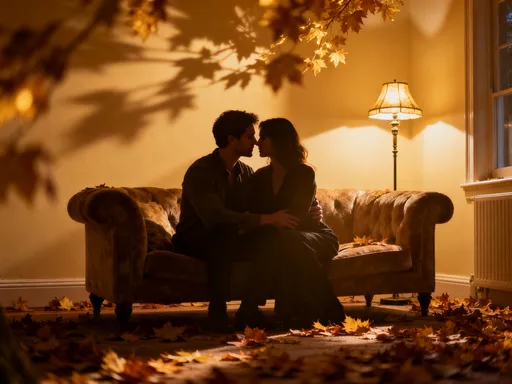
As summer faded, I worried we’d fall back into our winter patterns—rushing indoors, turning on harsh lights, disconnecting. But this time, we were prepared. We used lighting to help us transition more gently into the shorter days. In the late afternoon, when the light outside began to fade, we’d activate a “Transition Mode” in the living room—warm tones, medium brightness, just enough to ease the shift from day to night.
It sounds simple, but that small ritual made a big difference. Instead of feeling like the darkening sky was a signal to shut down, we began to see it as an invitation to slow down—together. We started lighting candles (real and electric) and turning on floor lamps instead of overheads. We kept the screens to a minimum in the evenings, letting the low light remind us it was time to rest.
One night, as we sat under the soft glow, my partner turned to me and said, “How are you really feeling?” Not the automatic “How was your day?” but a deeper, more intentional question. And because the room felt safe, because the light was kind, I was able to answer honestly. We talked for over an hour—about stress, about change, about things we were both nervous about. It wasn’t a therapy session, but it was real. And I realized: the light hadn’t caused the conversation, but it had made it possible. It had created a container for honesty, for empathy, for presence.
Building a Language of Light (Without Saying a Word)
By the time we reached the end of the year, we had developed a kind of unspoken rhythm with our lighting. We didn’t talk about it much—it just became part of how we lived. A specific hue in the bedroom—soft pinkish-amber—meant “I need quiet time.” A slow fade from bright to dim in the living room meant “let’s end the night gently.” If one of us was feeling overwhelmed, we’d sometimes adjust the lights without a word, and the other would notice and respond.
It wasn’t about control. It wasn’t about setting rules. It was about care. The lights became a way of saying, “I see you. I’m here. I want to make this space work for both of us.” We even started using temporary scenes for tough days—“Low Energy Mode” was extra dim, extra warm, with no blue tones at all. It was like a visual hug.
What’s beautiful is how this system evolved naturally. We didn’t force it. We just paid attention to what worked, what made us feel calm, connected, or energized—and we adjusted. Over time, our home became more than a place we lived in. It became a reflection of our relationship, shaped by small, intentional choices. The lighting didn’t fix our communication issues—but it gave us tools to navigate them with more grace.
One Year Later: More Than Just Better Lighting
Looking back, I can see how much changed over the year—not because of the technology, but because of how we used it. The real upgrade wasn’t in our bulbs or our app. It was in our awareness. We learned to notice the rhythms of the seasons, the shifts in our moods, the subtle ways our environment affects how we show up for each other.
Smart lighting didn’t solve every challenge in our relationship. We still have busy days, miscommunications, moments of frustration. But now, we have a tool that helps us reset, reconnect, and return to each other with more intention. It’s not about having the perfect home or the most advanced tech. It’s about using what we have—thoughtfully, kindly, with love—to create moments of presence in a world that often pulls us apart.
If you’re feeling disconnected, overwhelmed, or just stuck in a rut, I don’t want to oversell the power of a light bulb. But I will say this: small changes in your environment can lead to big shifts in your emotional life. Try dimming the lights tonight. Warm up the tone. Sit together without screens. See what happens. You might be surprised by how much a little light can hold—a conversation, a moment, a connection. And sometimes, that’s enough.